
Robotic paint spraying
Automated paint application shaped around coverage, access and finish.
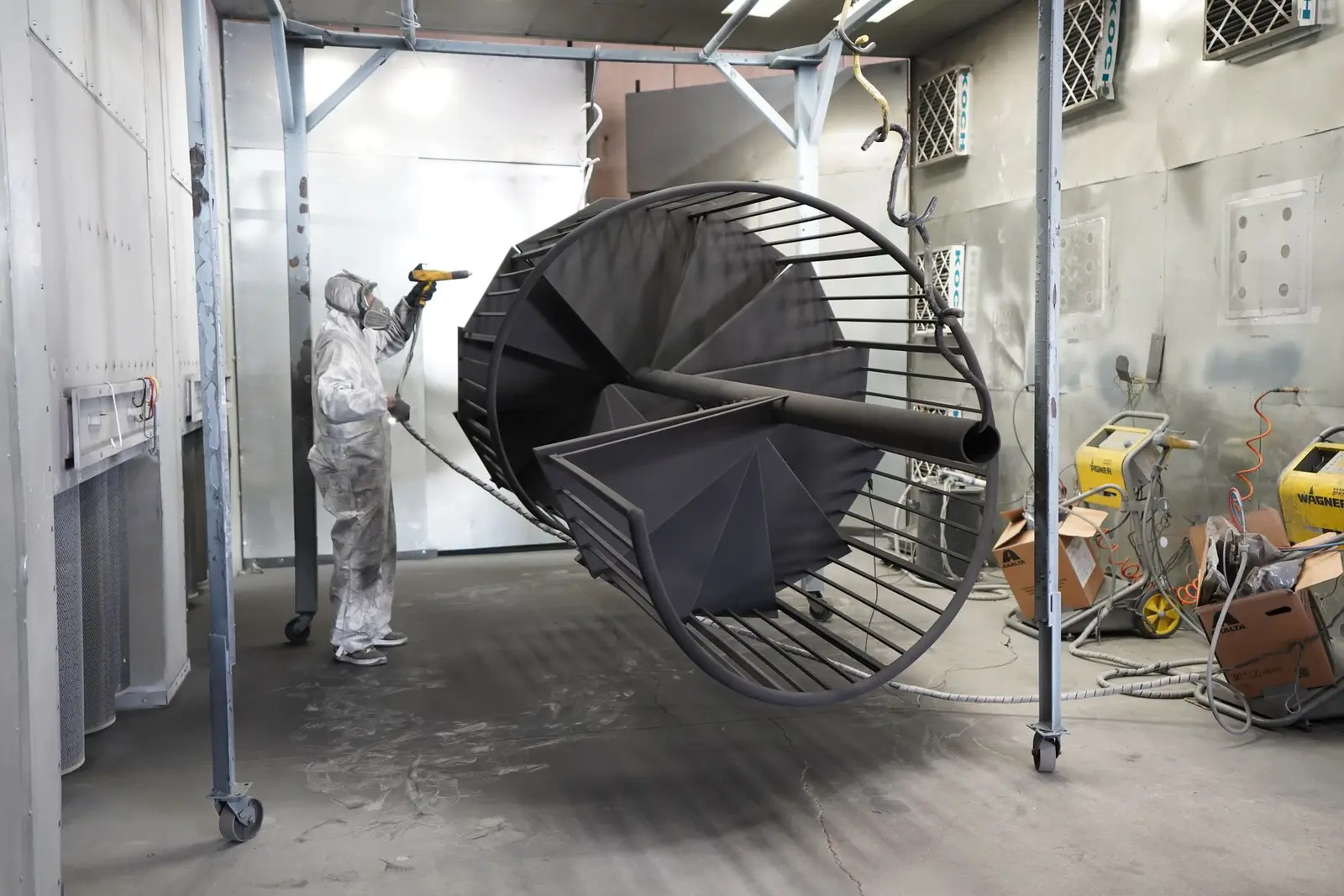
A robotic paint spraying system controls the position and movement of the applicator around the part. Oxford Industrial Automation develops the complete cell around the coating, substrate, geometry, production rate and controlled-environment requirements.
Application engineering
Define the finish before selecting the robot.
We review coating type, viscosity, solids content, colour changes, film-build target, finish zones, masked areas and acceptable variation. Part drawings and sample trials help establish gun access, edge coverage and the need for a turntable, positioner or moving conveyor.
Robot reach and payload include the complete applicator, hoses, dress pack and any auxiliary equipment. Programme development then considers approach, lead-in, lead-out, overlap and the relationship between motion and material flow.
- Wet paint, primers, lacquers and selected protective finishes
- Fixed, indexed or conveyor-tracked parts
- Automatic gun trigger and process recipe control
- Colour-change and flushing interfaces where required
Finish control
Repeatable motion supports a repeatable process.
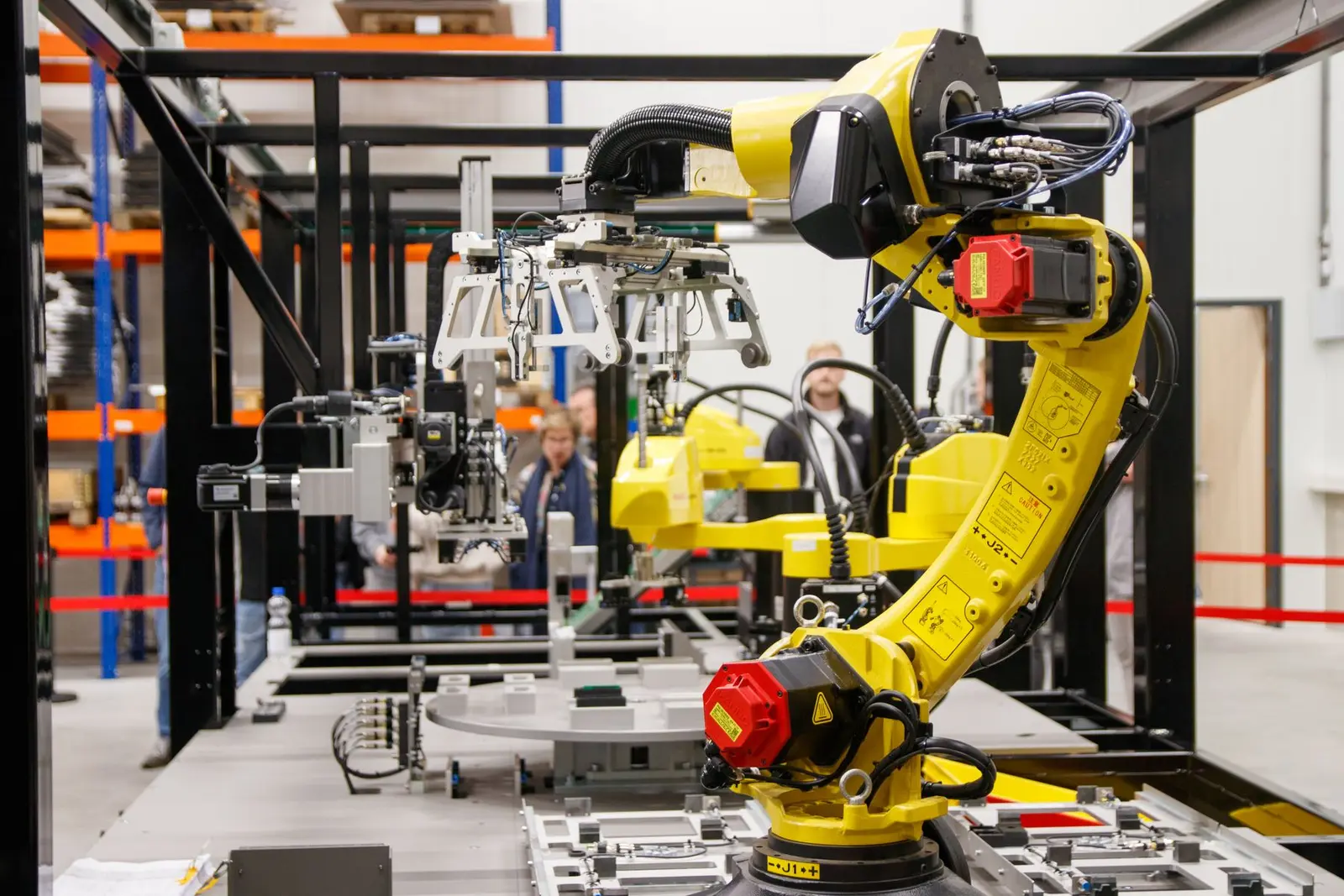
Robot programmes can reproduce the same nominal path cycle after cycle. The wider cell must also keep part location, material supply, airflow and applicator condition within the agreed window.
Acceptance criteria can include visual standards, defined coverage zones, film-thickness sampling, cycle time and recipe verification. The test method is agreed before build so the cell is proved against measurable requirements.
- Controlled spray distance and orientation
- Stable part fixtures and datums
- Process pressure and flow monitoring options
- Defined cleaning and maintenance routines
Cell environment
Paint chemistry determines the control measures.
Safety data sheets and the proposed atomisation method are essential design inputs. Where flammable vapours, harmful mist or explosive atmospheres may occur, extraction, hazardous-area classification, compatible components, fire precautions and access control must be addressed by competent people.
We document the agreed interfaces between the robot cell, spray booth, paint kitchen, extraction, fire systems and the customer’s wider process.
- Booth and extraction interlocks
- Safe isolation and maintenance access
- Hose routing and protected dress packs
- Risk-assessment and validation inputs
Questions before concept
Practical answers for your spraying project.
Every system is engineered around your parts, materials, finish and production targets.
Browse all FAQs →Can a paint robot spray complex shapes?
Six-axis robots can access many complex surfaces, but reach, wrist orientation, self-collision, hose routing and shadowing must be checked against the actual part. Positioners may improve access.
Does robotic spraying guarantee a perfect finish?
No single component can guarantee finish quality. The robot improves path repeatability; material preparation, atomisation, airflow, substrate condition, fixturing and cure still need to be controlled.
Can the system change colours?
Colour-change equipment, flushing sequences and waste handling can be integrated where the paint system supports them. The acceptable change time and contamination limit should be specified.
Can you automate an existing manual spray process?
Yes, subject to application review. A current-process video, spray parameters, reject history and representative parts are particularly useful for assessing automation.
Discuss the real application
Planning an automated paint cell?
Share the coating data, part range, finish standard and required output for an initial application review.
What determines the ROI of an automated paint-spraying line?
ROI depends on good output, labour redeployment, coating use, overspray, rework, changeover, cleaning, uptime and the capital and operating costs of the complete cell. A defensible case compares measured current performance with an agreed automated process and realistic utilisation.