
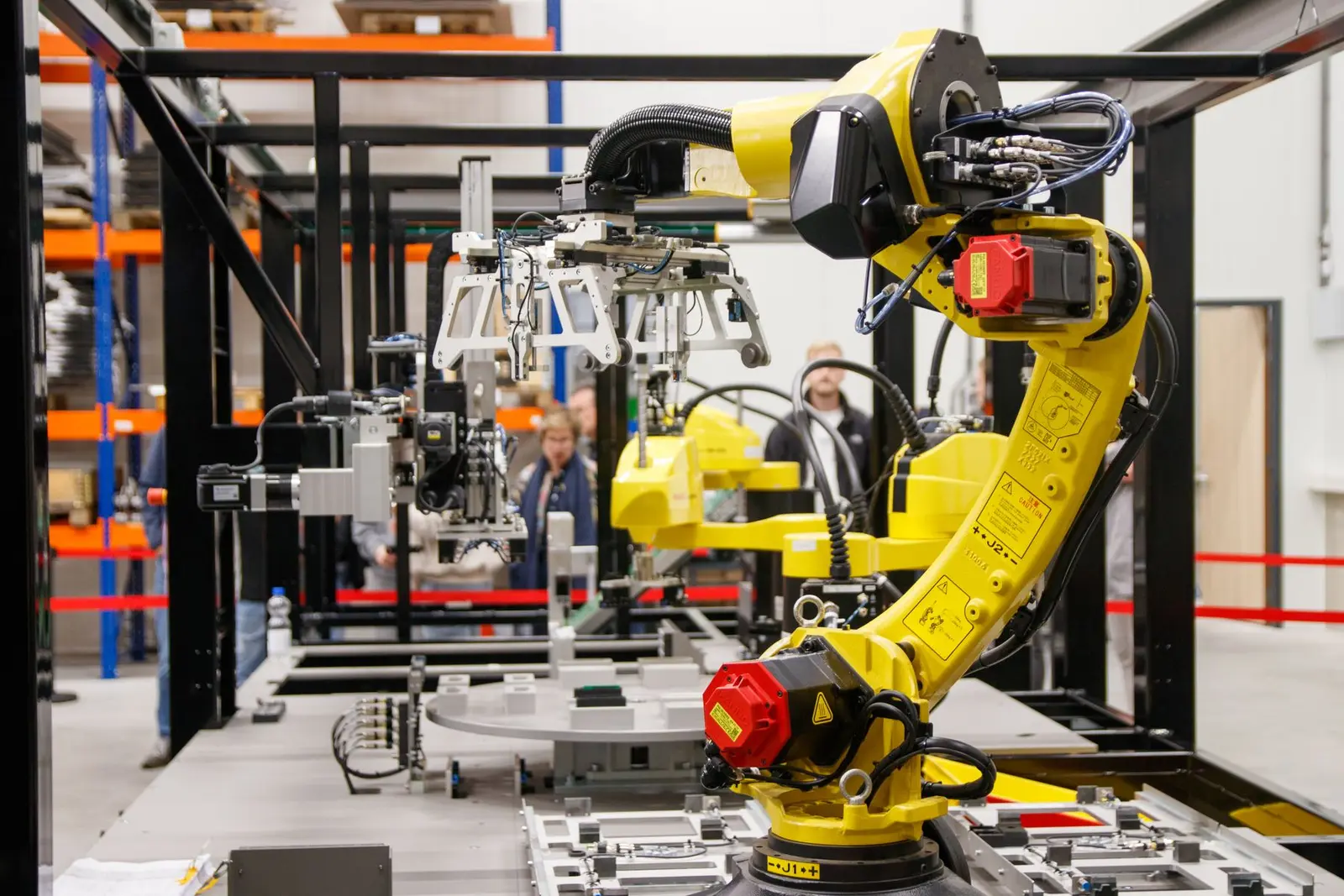
Six-axis spraying robots
Robot selection based on the complete moving process package.
A spraying robot is selected against reach, wrist orientation, payload, repeatability, protection, hazardous-area requirements and hose management. Oxford Industrial Automation supplies complete cells—not an isolated arm without the process around it.
Representative platform
A useful starting point—not a substitute for selection.
Oxford Industrial Automation currently lists a representative six-axis spraying platform with a published 2,000 mm reach, 13 kg payload, 0.5 mm repeatability and explosion-proof/body IP65 description.
These figures are reference information only. The actual robot and process equipment are confirmed against the total moving payload, reach envelope, cycle, environment, services and safeguarding requirements.
- Paint, coating and spray-gun operations
- Selected powder or dust spraying
- Accessory handling in protected spray environments
- Automated coating of varied geometries
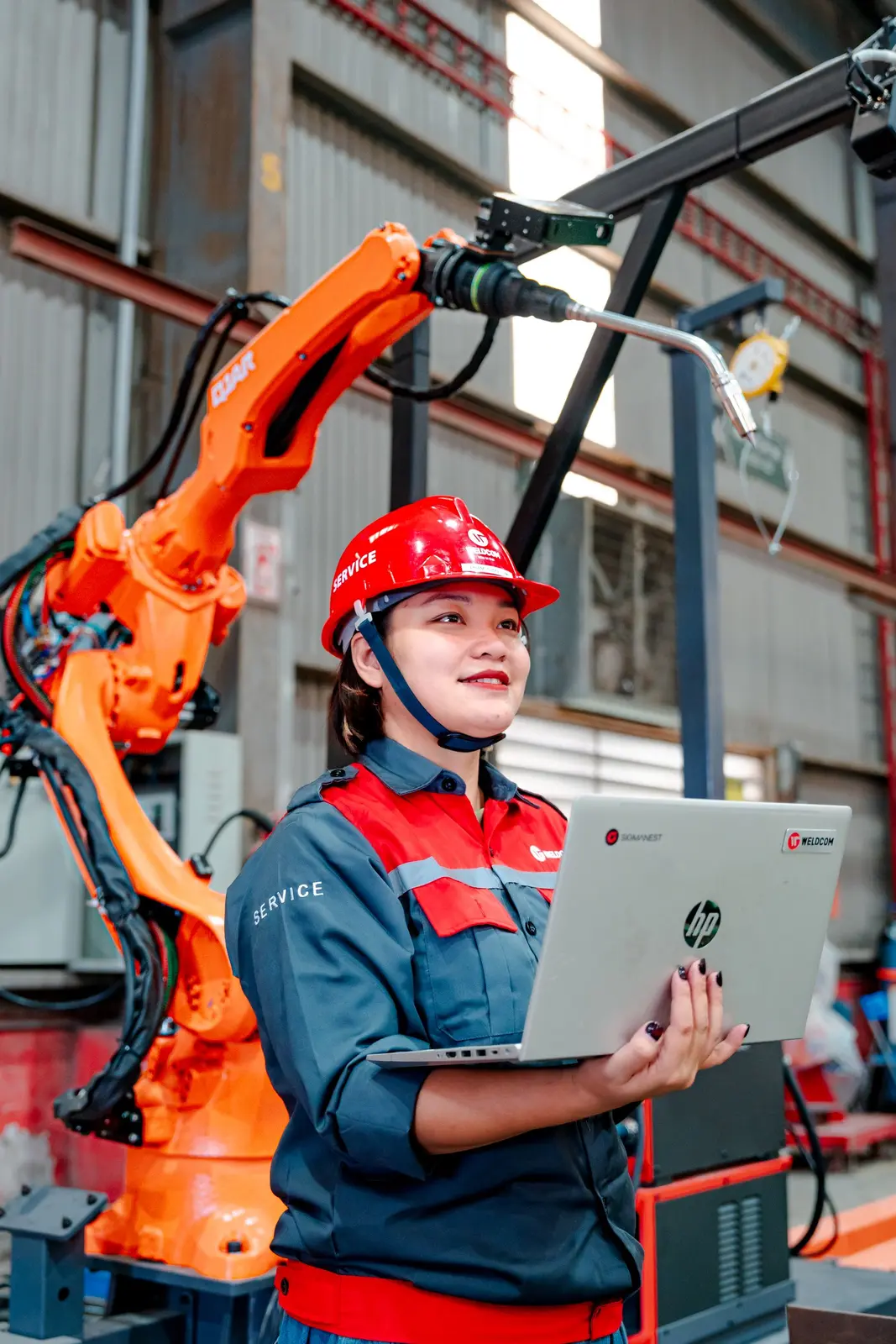
Payload and dress
Count everything that moves with the robot.
Payload includes the applicator, valves, brackets, sensors, hose forces and any quick-change components. Centre of gravity and wrist inertia can matter as much as nominal weight.
The dress pack must move through the programmed envelope without snagging, excessive bend, contamination or unacceptable load on the applicator.
- Complete tool weight and centre of gravity
- Hose and cable routing through all poses
- Cleanability and protective covers
- Maintenance and replacement access
Robot architecture
Six axes suit many—but not every—spray tasks.
Six-axis robots offer broad orientation freedom for complex parts. Simpler planar products may suit another mechanism, while large or continuous processes may need a track, gantry, positioner or more than one robot.
We compare architectures against the task rather than assuming the most familiar robot format.
- Fixed pedestal, wall or elevated mounting
- Linear track for extended work envelopes
- Servo positioners for coordinated motion
- Multiple robots for takt or access
Questions before concept
Practical answers for your spraying project.
Every system is engineered around your parts, materials, finish and production targets.
Browse all FAQs →Is the 13 kg robot suitable for my spray gun?
Only after the full moving payload, centre of gravity, hose forces, required poses, acceleration and environmental suitability are checked.
Do I need an explosion-proof robot?
That depends on the hazardous-area assessment for the actual substance, process and installation. A robot description alone does not establish whole-cell suitability.
Can the robot be mounted on a track?
Yes, where an extended work envelope justifies a coordinated linear axis and the cycle, services and guarding can support it.
Can you integrate another robot brand?
Platform selection is application-led. We can assess suitable industrial robot options, controls, support and process compatibility for the project.
Discuss the real application
Let the application choose the robot.
Send the part envelope, tool data, cycle and environment so reach and payload can be assessed correctly.