
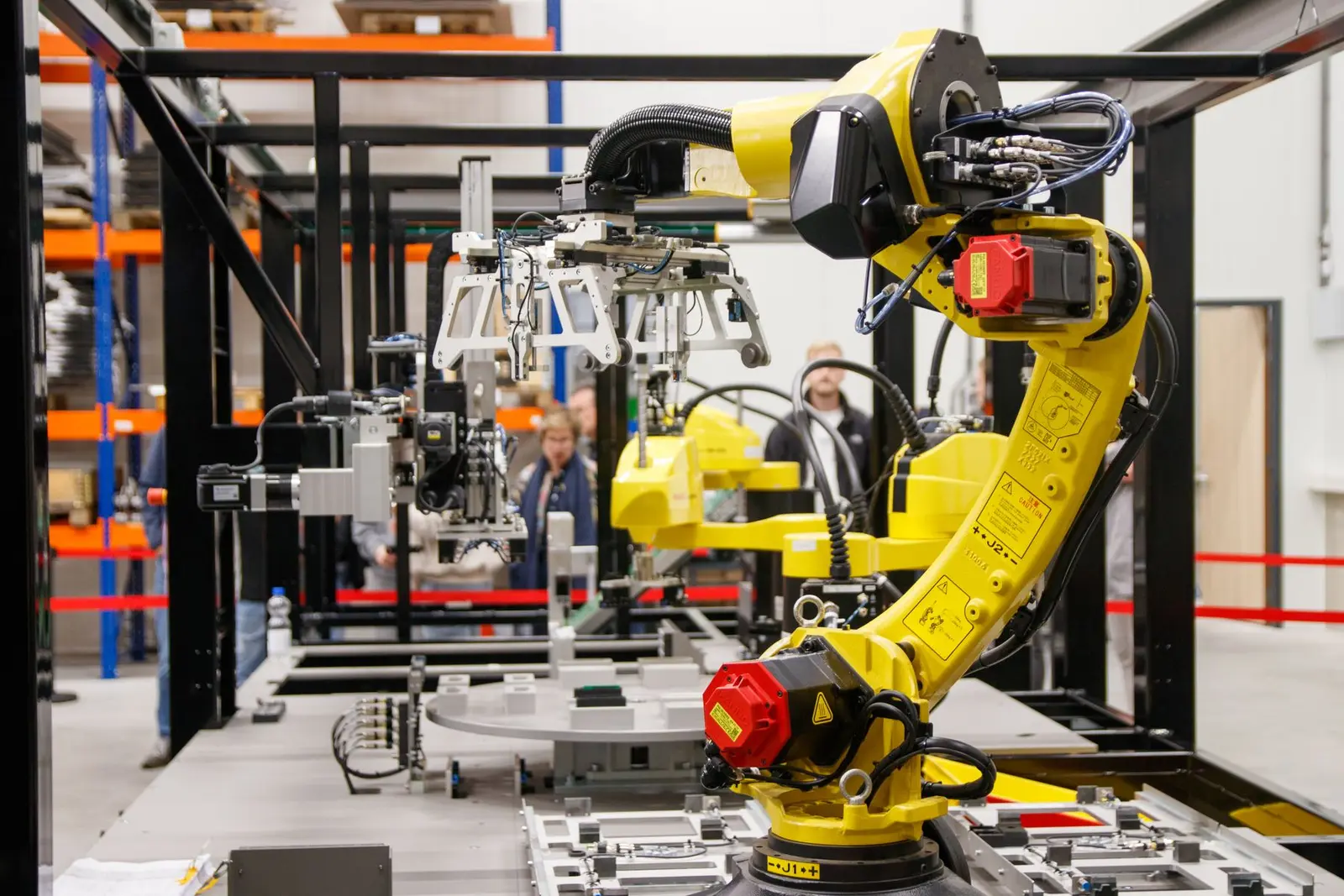
Robotic adhesive application
Controlled adhesive paths for bonding, sealing and coverage.
Robotic adhesive systems can apply sprayed films, beads, dots or defined patterns with consistent movement and programmed recipes. We integrate the robot with metering, dispensing, fixtures, sensing, controls and material-handling interfaces.
Process first
Match motion, metering and material behaviour.
The adhesive supplier’s processing window, open time, mix ratio, temperature, viscosity and surface-preparation requirements shape the cell. We assess how the applicator must move and how the material should start, stop and recover at corners or changes in speed.
For two-component materials, the metering and mixing package is treated as a core process system rather than a robot accessory. Purging, pot life, cleaning and planned downtime all influence the practical design.
- Meter-mix and dispense-package integration
- Heated hose and temperature-control interfaces
- Bead-start, stop and corner compensation
- Purge, flush and waste-management sequences
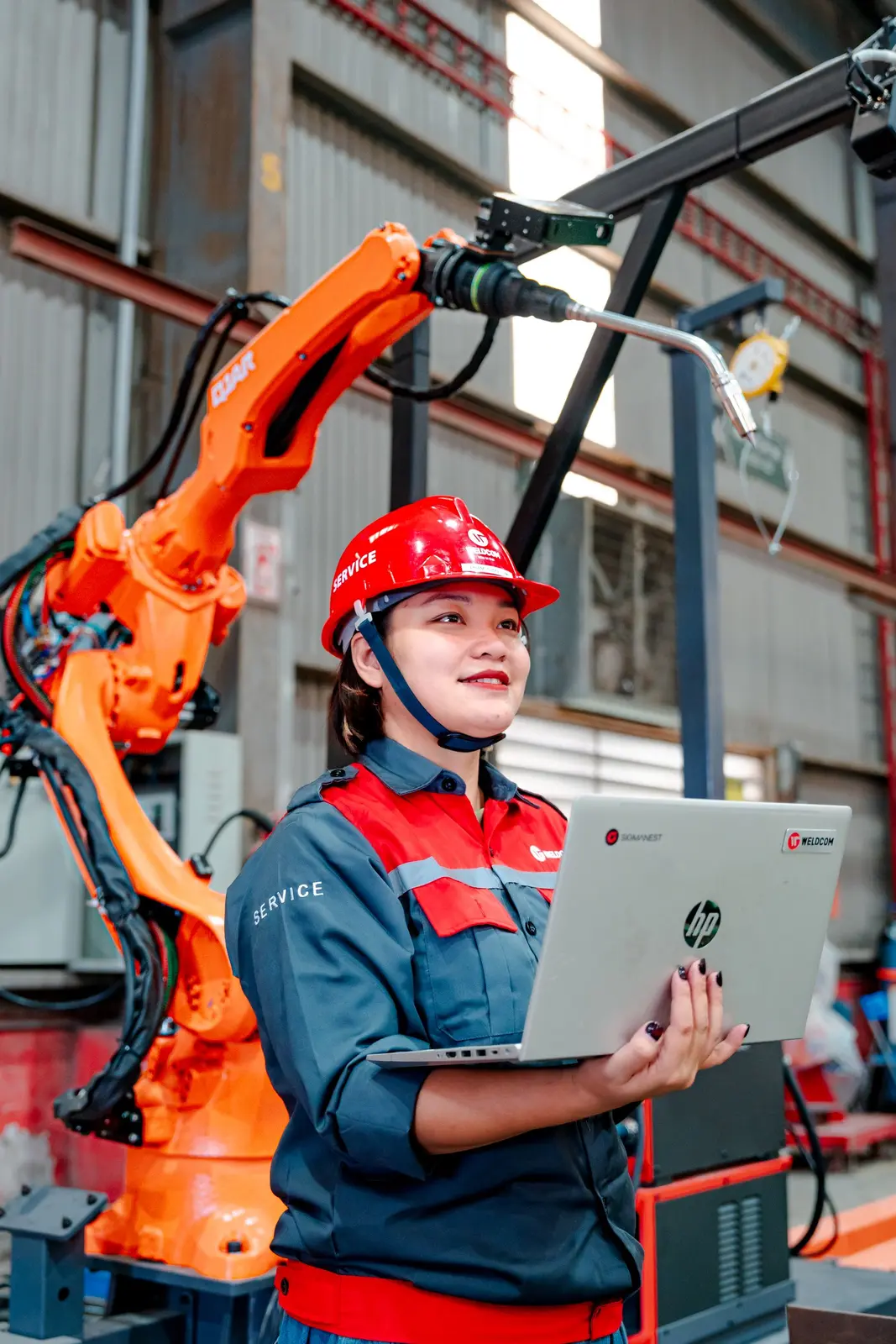
Quality options
Make the application measurable where the process needs it.
Depending on the material and quality risk, the system can include pressure monitoring, flow or shot-volume checks, temperature supervision, nozzle-cleaning confirmation and vision or laser bead inspection.
The right level of monitoring is selected against the failure mode. A critical structural bond may justify more verification than a non-critical tack or temporary assembly aid.
- Material-presence and pressure monitoring
- Bead width, location or continuity inspection options
- Part-present and fixture-status checks
- Recipe and batch-data interfaces
Changeovers
Design for real product variation.
Stored programmes can support multiple part variants when the work envelope and tooling allow. Product identification can select the correct path and process recipe, while fixture sensors reduce the risk of running the wrong setup.
Where applicators or nozzles must change, manual guided changeover or automatic tool-changing can be assessed against rate, contamination and investment requirements.
- Barcode, RFID or production-order recipe selection
- Quick-change fixtures and datum control
- Nozzle cleaning and verification
- Guided setup and first-off approval
Questions before concept
Practical answers for your spraying project.
Every system is engineered around your parts, materials, finish and production targets.
Browse all FAQs →Can the same robot spray adhesive and dispense a bead?
Potentially, using changeable tooling or a multi-process end effector. Material compatibility, cleaning, payload, hose routing and cycle-time impact must be checked.
Do you supply the adhesive equipment?
We can integrate appropriate metering, pumping, heating, mixing and dispensing equipment within the agreed cell scope, including specialist partner equipment where required.
Can the bead be inspected?
Yes. Camera or profile-sensor options can check bead presence, position, width or continuity, subject to the adhesive colour, surface, geometry and required detection limit.
What samples are needed?
Representative parts, adhesive technical and safety data, target bead or coverage drawings, cure requirements and examples of acceptable and unacceptable application are valuable.
Discuss the real application
Define your adhesive application.
Send the part, material data, target pattern and production rate so we can assess the complete process.