
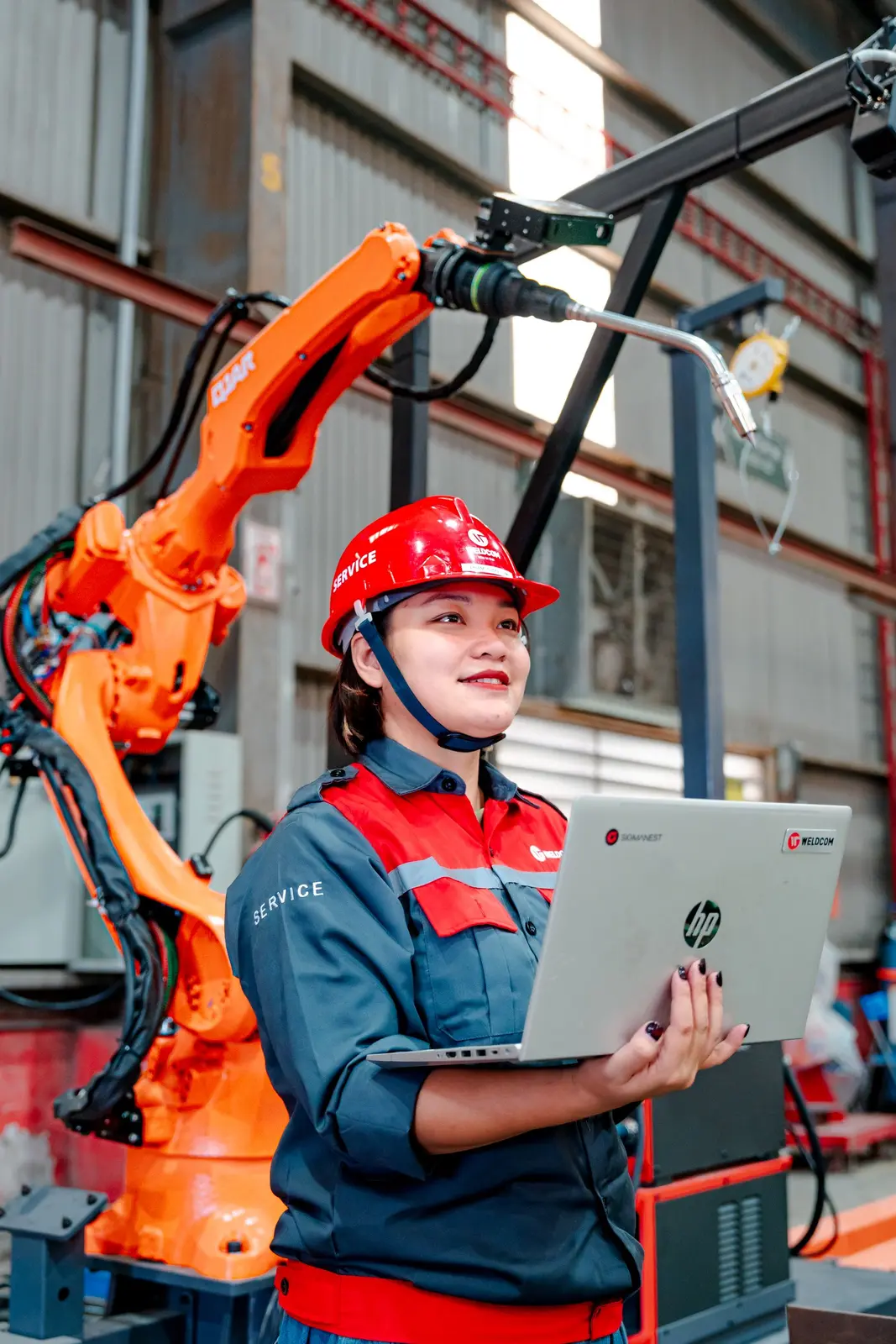
Robot path programming
Turn finish requirements into repeatable robot motion and process recipes.
Effective spray programming manages more than a list of robot positions. It coordinates surface orientation, stand-off distance, travel speed, pass overlap, trigger timing and process settings across the complete part.
Offline preparation
Use digital models to reduce risk before the cell is complete.
Part, fixture, robot and cell models can be used to study reach, wrist posture, collisions, hose movement and approximate cycle time.
Offline work accelerates development but does not replace physical tuning. Material behaviour, airflow, fixture tolerance and the real spray pattern are verified during proving.
- Reach and singularity review
- Collision and clearance checks
- Approximate cycle-time evaluation
- Initial path generation from CAD
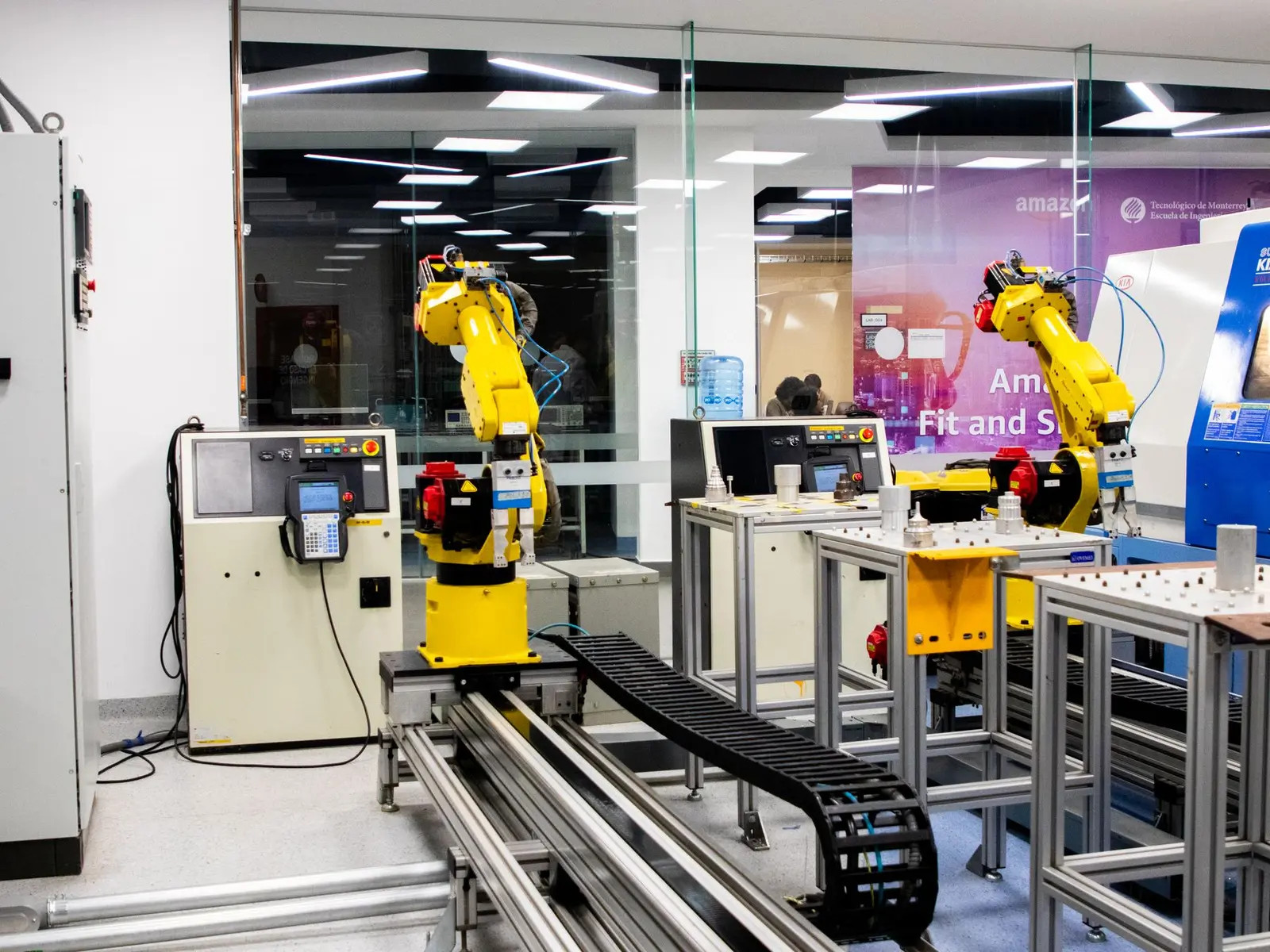
On-part tuning
Commission with the real gun, material and workpiece.
The programmer tunes lead-in, lead-out, corners, edge behaviour, local speeds and trigger timing while process specialists adjust atomisation and delivery settings.
Representative parts are inspected using the agreed acceptance method, and the programme is refined until the required balance of finish, rate and material use is achieved.
- Surface-normal orientation where practical
- Corner and contour speed management
- Pass overlap and edge transitions
- Process setting coordination
Programme governance
Protect validated recipes from uncontrolled change.
Named recipes, controlled access, backups and revision records help maintain a proven process. Product identification can select only approved programmes and block a cycle when fixture or part checks disagree.
The handover can include operator guidance, controlled adjustment limits and a route for engineering changes.
- Version-controlled robot and process recipes
- Role-based adjustment permissions
- Backup and restore procedure
- First-off checks after change
Questions before concept
Practical answers for your spraying project.
Every system is engineered around your parts, materials, finish and production targets.
Browse all FAQs →Can paths be programmed from CAD?
CAD can support offline path generation, reach checks and simulation. The programme still needs on-cell verification and finish tuning with representative production conditions.
Can you programme an existing robot?
Possibly, subject to robot make, controller age, software access, condition, backups, safety system and available cell documentation.
How are multiple products managed?
Each variant can have an approved robot path and process recipe selected by the cell controller, barcode, RFID, production order or operator choice with appropriate checks.
Can operators adjust the spray path?
Access should be role-based. Operators may receive limited recipe or offset controls, while engineering changes remain protected and documented.
Discuss the real application
Need a repeatable spray programme?
Share CAD, parts, existing cycle information and finish criteria for a programming and integration review.