
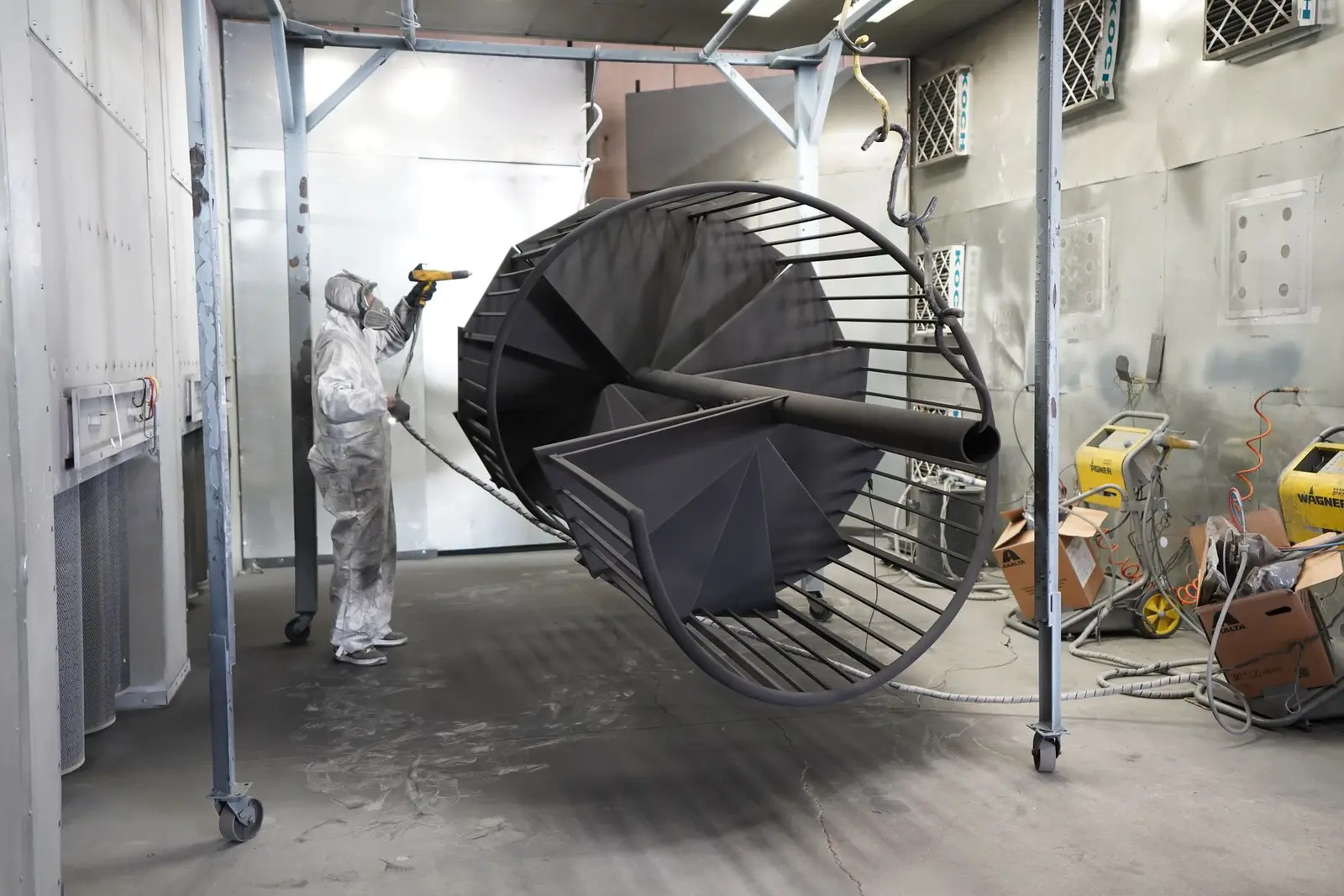
Automatic spray guns and applicators
Choose the spray applicator as part of the complete robotic process.
An automatic spray gun only performs consistently when the material supply, atomisation, robot path, triggering, flushing and booth conditions are engineered together. Oxford Industrial Automation integrates the applicator and robot around your coating, parts and finish criteria.
Quick answer
What is an automatic spray gun system?
An automatic spray gun system uses a remotely triggered applicator supplied by pumps, pressure vessels or metering equipment. The gun may be fixed, mounted on a reciprocator or carried by an industrial robot. In a robotic cell, the controller coordinates the gun trigger with path position, speed and the production recipe.
The correct selection is application-specific. Coating viscosity, solids, pot life, required film build, substrate, part geometry, finish class and cleaning method all influence the gun, nozzle, pump and control architecture.
- Applicator and atomisation method matched to the coating
- Robot payload and dress pack checked with live hoses fitted
- Trigger points and spray parameters stored by recipe
- Cleaning, flushing and safe pressure release included in the sequence
Method selection
Compare the deposition method before selecting a robot gun.
Conventional air spray and HVLP are often considered where finish quality and fan control are central. Airless and air-assisted airless methods can suit higher-viscosity materials or faster film build. Electrostatic guns or rotary atomisers may improve wrap and transfer efficiency where the coating, workpiece and earthing arrangement are compatible.
These are starting points, not universal rules. Representative spray trials are the most reliable way to compare finish, edge coverage, consumption, cycle time and cleaning behaviour for the actual product.
| Approach | Typical reason to consider it | Important checks |
|---|---|---|
| Air spray / HVLP | Fine control and decorative finishes | Air demand, overspray, coating viscosity |
| Airless | Higher-viscosity coatings and faster build | Pressure, tip selection, finish requirement |
| Air-assisted airless | Film build with added atomisation control | Two-variable setup and cleaning |
| Electrostatic / rotary | Compatible conductive parts and materials | Earthing, safety, recesses and colour strategy |
Integration detail
Control material delivery and robot motion as one recipe.
A repeatable path cannot compensate for unstable fluid pressure, changing viscosity or an obstructed nozzle. The PLC and robot programme can coordinate pump readiness, extraction permissives, part identification, trigger timing, flow confirmation and fault handling.
Maintenance access also matters. The cell should provide practical positions for nozzle checks, gun exchange, filter service, hose replacement and flushing without improvised access into the safeguarded area.
- PLC and robot handshake for process-ready conditions
- Recipe control for fluid, fan and path parameters
- Gun-cleaning, purge and waste-collection strategy
- Accessible service positions and planned spare parts
Buyer questions
Answers for an initial application review.
Final equipment and performance are confirmed against your parts, material, environment and production requirements.
Browse all FAQs →Which automatic spray gun is best for a robot?
There is no single best gun. Selection depends on the coating, viscosity, finish, film build, part geometry, production rate, cleaning method, hazardous-area assessment and preferred process supplier.
Can you integrate our preferred gun and paint equipment?
Often yes, subject to technical compatibility, communications, safety requirements, support arrangements and successful application trials.
Does the robot control paint flow?
The robot can trigger and coordinate the application, while pumps, regulators, metering equipment and the PLC control or monitor the material-delivery parameters selected for the process.
Should the applicator be proved before the cell is built?
Where finish or material behaviour is uncertain, representative spray trials can reduce risk by comparing atomisation, coverage, cycle time and cleaning before final design.
Discuss the real application
Turn your production need into a workable concept.
Share representative parts, material data, finish criteria and required output for an initial engineering review.