
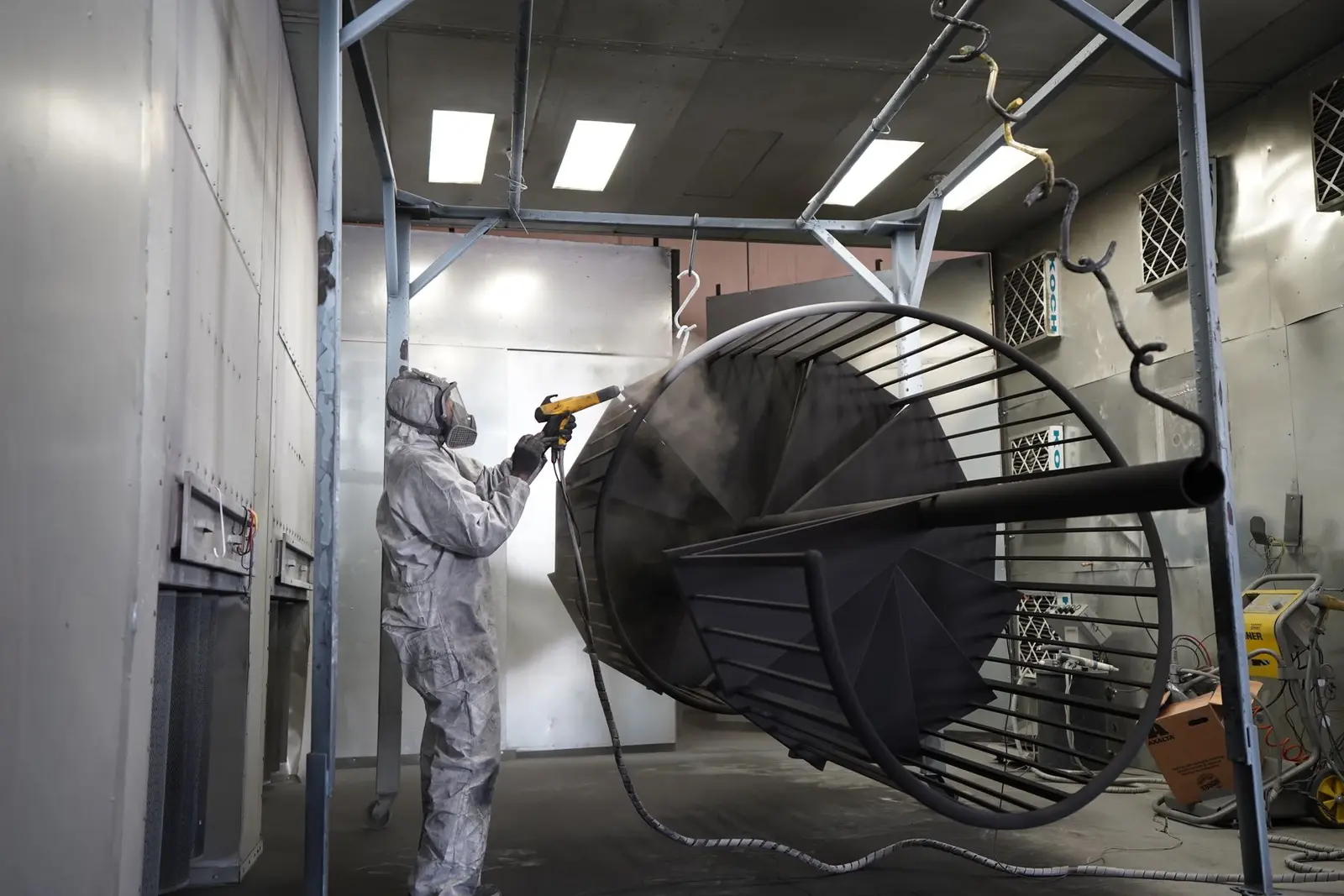
Industrial coating automation
Robotic coating cells for consistent, production-ready application.
From primers and protective finishes to selected powder and specialist coating processes, the cell must coordinate material delivery, robot motion, part presentation and the controlled environment. We engineer those elements around the product and acceptance criteria.
Process architecture
Select the application and handling method together.
Part orientation affects access, transfer efficiency and finish. A fixed fixture may be appropriate for simple products; a servo positioner can expose complex faces; conveyor tracking may suit continuous production. The coating technology and recovery system influence the preferred arrangement.
We model the work envelope with the full applicator and hose package, then define how parts enter, locate, move and leave the controlled area.
- Six-axis robot and positioner options
- Conveyor tracking and indexed transfer
- Single- or multi-station cell concepts
- Application-equipment and recovery-system interfaces
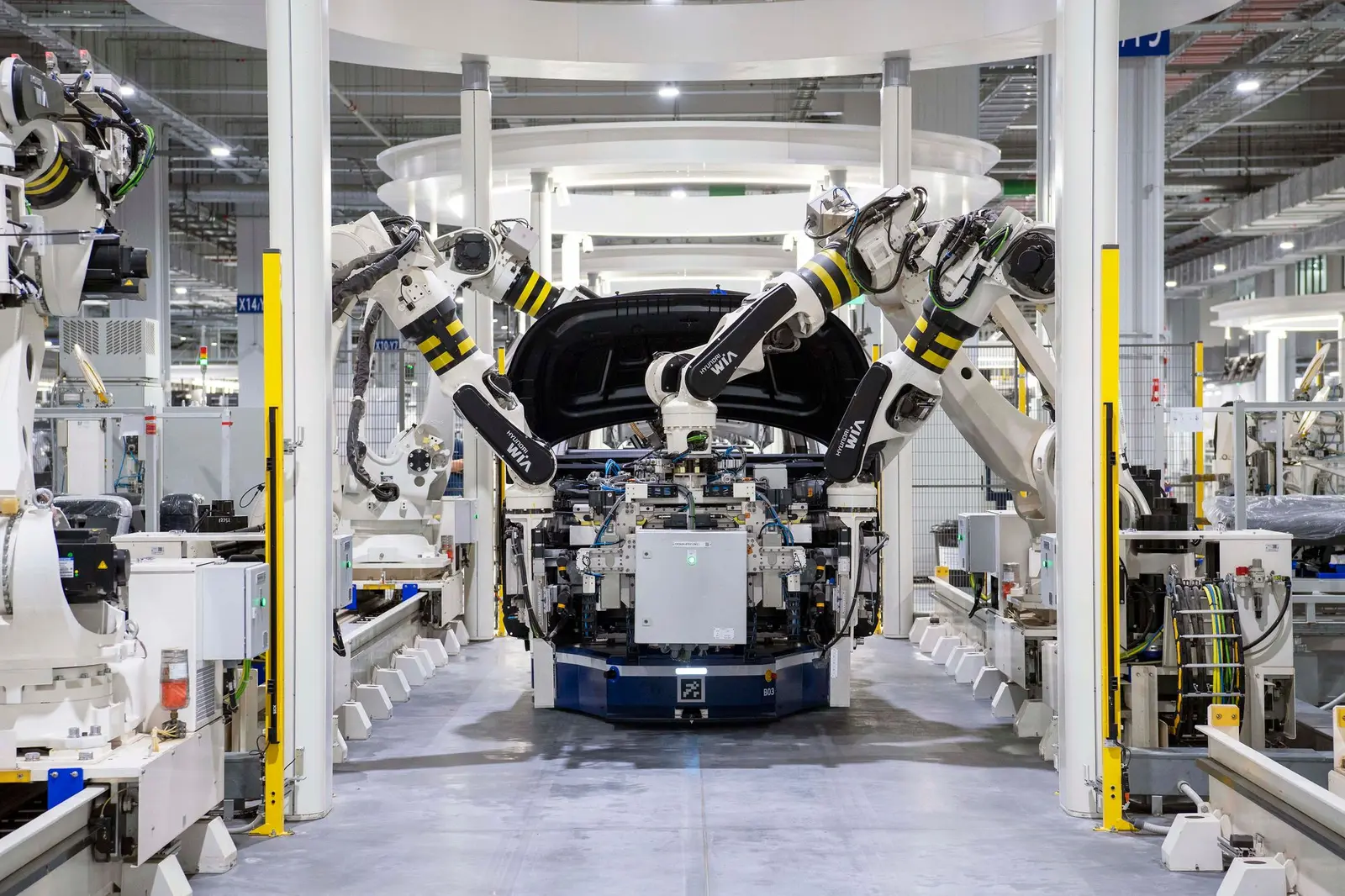
Finish and throughput
Balance cycle time with the required deposition.
The fastest robot path is not necessarily the correct coating path. Gun speed, overlap, distance, angle, trigger timing and dwell are set around coverage and material behaviour.
Where takt time is demanding, options include coordinated positioners, parallel robots, multiple applicators or splitting the task across stations. The final approach is proven against representative parts and agreed inspection methods.
- Cycle-time simulation and path optimisation
- Critical-zone and edge coverage
- Multi-pass and layer sequencing
- Part-to-part recipe control
Lifecycle
Cleaning and maintenance belong in the production design.
Nozzle access, filter changes, powder or paint build-up, hose replacement and applicator servicing affect uptime and safety. The cell layout should allow these tasks to be completed without improvised access.
Operator instructions, planned maintenance, spares recommendations and recovery procedures form part of the handover scope agreed for the project.
- Accessible cleaning and service positions
- Protected dress packs and managed hose movement
- Maintenance prompts and operating checks
- Training and handover documentation
Powder and electrostatic coating
Choose the application method from the material, substrate and finish.
Powder, liquid and electrostatic processes place different demands on the robot, applicator, booth, earthing, recovery and cure. We review these as system choices before fixing the cell concept.
- Substrate conductivity and earthing
- Edges, recesses and Faraday-cage areas
- Recovery, cleaning and colour strategy
- Pretreatment and cure interfaces
Questions before concept
Practical answers for your spraying project.
Every system is engineered around your parts, materials, finish and production targets.
Browse all FAQs →Can you automate powder coating?
Selected powder-coating applications can be assessed with appropriate booth, recovery, extraction, electrostatic and hazardous-dust controls. The process supplier’s requirements are core design inputs.
Can a positioner move the part while the robot sprays?
Yes. Coordinated positioners can improve access and maintain a preferred gun orientation, subject to payload, balance, cable routing, controls and cycle requirements.
How is coating quality accepted?
The project can define visual standards, coverage zones, film-thickness checks, defect limits, adhesion or cure tests and sample frequency as applicable to the coating.
Do you retrofit existing booths?
Retrofit may be possible after surveying access, extraction, services, controls, structural mounting, hazardous-area requirements and remaining equipment life.
Discuss the real application
Discuss your industrial coating process.
Provide the material, part range, production rate and finish criteria for a concept-level review.
Separate a repeatable robot path from a proven coating process
Turn the part drawing into a coverage map
Identify faces that require coating, areas that must remain clear, edges, recesses and surfaces hidden by fixtures. State the finish or coverage criteria approved by the product owner and where measurements will be taken. A robot path can be highly repeatable while consistently missing a difficult recess. Review the need for a positioner or revised fixture before trying to solve every access problem with the spray programme. Keep representative parts with normal dimensional and surface variation available for the trial.
Record material and presentation conditions
Record coating identity and condition, substrate preparation, fixture reference, application settings and the sequence used. Material delivery and the environment can change the finish even when the robot programme is unchanged. Compare trial samples under agreed conditions and retain evidence from corners, edges and difficult faces. Changes to booth, extraction or hazardous-area arrangements require the appropriate competent assessment; the process trial should not be treated as approval of the installation or as proof of compliance with every applicable duty.
Test a production change and an interruption
For a multi-product cell, include the change in fixture, programme and material recipe in the acceptance plan. Establish the checks required before a new variant is released. An interruption may leave a partly coated component whose disposition needs an agreed rule rather than an automatic repeat of the full cycle. Record accepted parts, rework, material used for the defined test and operating interruptions separately. This makes proposals comparable without claiming a universal saving in paint, labour or cycle time before the actual application has been demonstrated.