
Controlled spray environments
A robot cell designed around the substance, people and process environment.
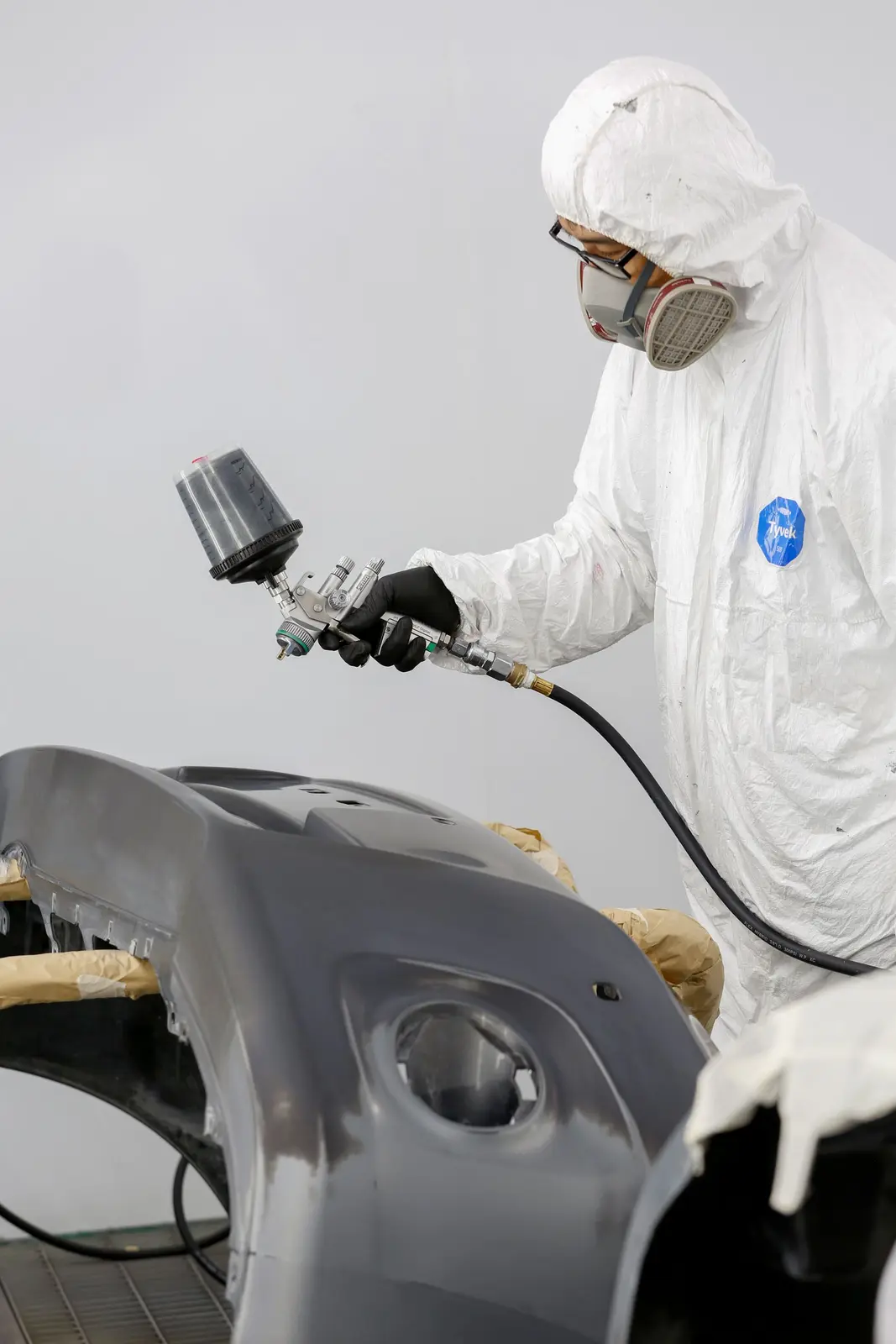
Spray mist, vapour, dust and deposited material can affect health, fire safety, finish quality and equipment life. A controlled spray cell brings the process, robot, booth, extraction, access and interlocks into one engineered operating concept.
Risk-led design
The material safety data is a design document.
Safety data sheets, application pressures, material quantities, flash points, dust characteristics and expected airborne contaminants inform the risk assessment.
Where DSEAR, COSHH, hazardous-area or specialist fire precautions apply, the appropriate competent inputs are identified and the system boundary is made explicit.
- Substance and process risk review
- Hazardous-area classification inputs where applicable
- Compatible equipment and ignition-source control
- Exposure-control and access strategy
Booth and extraction
Control airborne material at source.
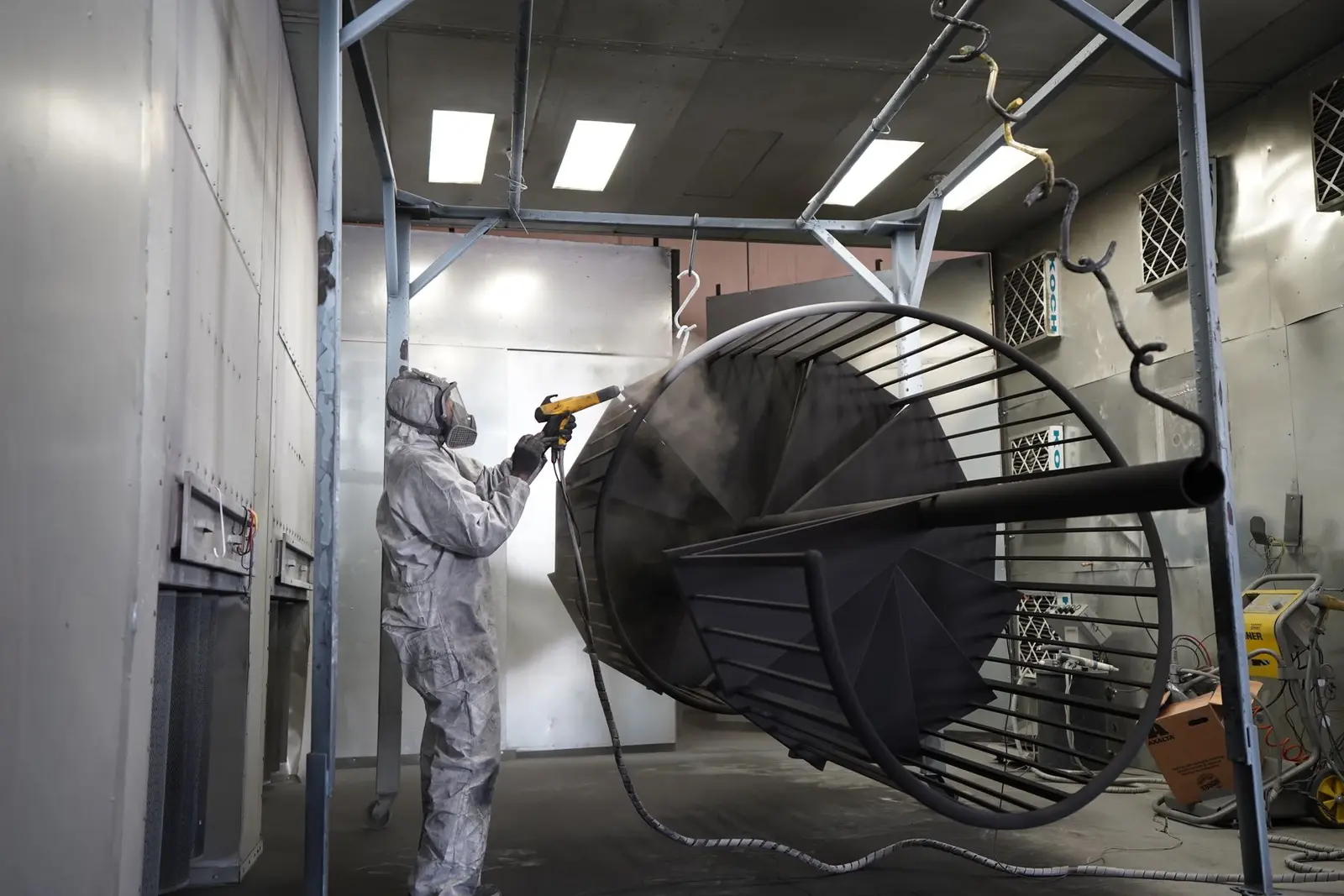
Booth geometry, openings, make-up air, extraction and filtration need to suit the spray process and part movement. Interlocks can prevent spraying unless required airflow and safe states are confirmed.
The final ventilation design, discharge arrangement, examination and maintenance duties remain subject to the applicable process and competent specialist design.
- Extraction status and spray-enable interlocks
- Door, conveyor and part-transfer openings
- Filter condition and maintenance access
- Defined clearance and safe-entry logic
Machinery safety
Plan normal work and foreseeable intervention.
Safeguarding must cover automatic movement, process hazards and the tasks needed to operate the cell. Loading, inspection, cleaning, nozzle changes, teaching and fault recovery are considered as distinct operating modes.
The design can combine fixed guarding, interlocked access, safe stop functions, enabling devices and controlled manual modes as the risk assessment requires.
- Perimeter guarding and interlocked doors
- Safe teaching and recovery provisions
- Isolation for cleaning and maintenance
- Clear operator information and training
DSEAR and hazardous areas
Let the risk assessment define the equipment and interfaces.
Where flammable paints, solvents or combustible dusts are present, the employer’s DSEAR assessment and competent area classification are design inputs. The complete system—not just the robot—must be suitable for the assessed conditions.
- Safety data sheets and process quantities
- Zone drawings and equipment requirements
- Extraction and booth permissives
- Safe cleaning, isolation and maintenance modes
Questions before concept
Practical answers for your spraying project.
Every system is engineered around your parts, materials, finish and production targets.
Browse all FAQs →Does every spraying robot need an explosion-proof specification?
No. Equipment suitability depends on the substances, quantities, process and hazardous-area classification. It must be assessed for the actual installation.
Can you connect to an existing extraction system?
Potentially, after its capacity, control signals, condition, test status and suitability for the proposed process are confirmed by the relevant competent parties.
Who is responsible for DSEAR and COSHH?
The employer or dutyholder retains legal responsibilities. The project should define which risk assessments, design inputs and evidence are provided by the customer, integrator and specialist suppliers.
Can operators enter immediately after spraying stops?
Not necessarily. Some booths and materials require a defined clearance period before entry. This is established from the ventilation and process risk assessment.
Discuss the real application
Define the complete spray-cell environment.
Send the material data, proposed process, part sizes and site constraints for an initial risk-led review.