
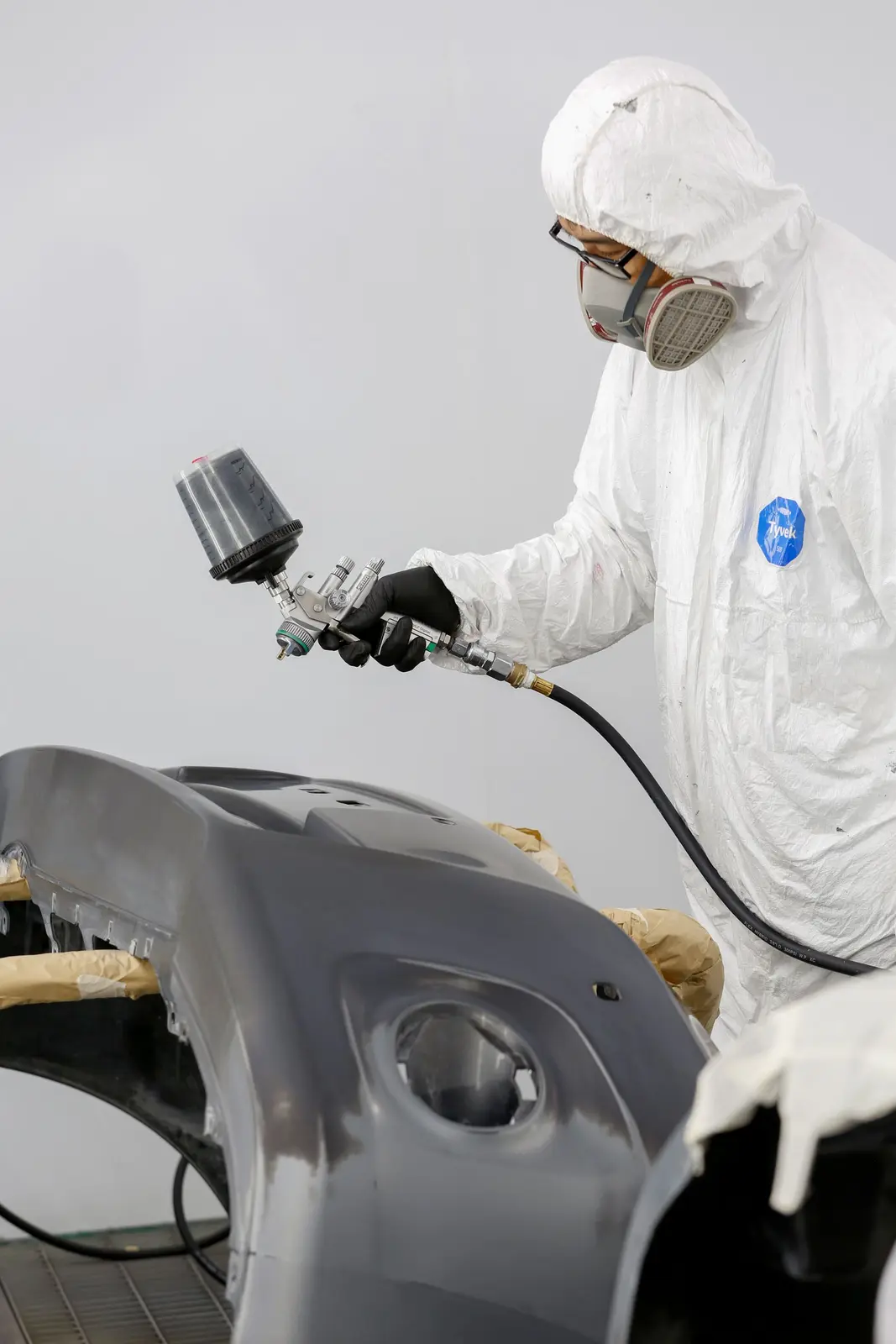
Spray booth robot retrofit
Turn an existing spray booth into a properly assessed robotic process.
A robot can sometimes be integrated into an existing booth or paint line, but suitability must be established from evidence. We review the enclosure, airflow, hazardous-area basis, services, access, structure, controls and remaining equipment life before recommending retrofit or replacement.
Quick answer
Can a robot be added to an existing spray booth?
Potentially. The booth needs enough usable work envelope for the robot, applicator, hoses, parts and safe service access. Extraction performance, fire and hazardous-area requirements, structural mounting, utilities and control interfaces must also support the proposed duty.
A desktop reach study is useful, but it does not replace a site survey. The survey establishes what can be retained, what needs modification and which assumptions require testing before a firm scope is issued.
- Measured booth and surrounding production layout
- Airflow, extraction and existing interlock information
- Electrical, pneumatic and material-service capacity
- Maintenance history and condition of retained equipment
Retrofit or replace
Compare whole-life risk, not only initial equipment cost.
A retrofit may reduce building work and reuse serviceable assets. A new cell may provide a cleaner route when the existing booth is too small, poorly documented, difficult to classify or close to major refurbishment.
The decision should compare performance, compliance work, production disruption, future product range, maintenance access and expected service life. Hidden interfaces in an older installation can otherwise become late project costs.
| Approach | Typical reason to consider it | Important checks |
|---|---|---|
| Retrofit may suit | Sound booth, known airflow, adequate space and services | Interface discovery and shutdown planning |
| New cell may suit | Major layout change or unsuitable existing enclosure | Building, extraction and utility works |
| Phased upgrade | Production cannot support one long outage | Temporary interfaces and staged validation |
Brownfield delivery
Plan the installation around a controlled production outage.
Brownfield work needs a clear boundary between pre-build activity and site work. Robot bases, panels, fixtures and software can be prepared and tested before the shutdown, while intrusive booth changes are sequenced around agreed isolations and permits.
A realistic recovery plan includes dry-cycle proving, process trials, acceptance parts, operator training and production support. The first shift after handover should not be the first time the complete process has been exercised.
- Surveyed interfaces and agreed customer responsibilities
- Pre-build and offline programming where practical
- Defined isolation, installation and recommissioning sequence
- Acceptance and ramp-up plan using representative parts
Buyer questions
Answers for an initial application review.
Final equipment and performance are confirmed against your parts, material, environment and production requirements.
Browse all FAQs →How do you know whether our booth is suitable?
We review measured space, robot reach, airflow and extraction information, structure, services, access, hazardous-area requirements, controls and equipment condition.
Can the existing spray gun and pump be retained?
Possibly, if condition, control interfaces, process performance, support and safety requirements are suitable for automatic operation.
Will the retrofit stop production?
Site installation normally needs a planned outage. The duration depends on booth modifications, services, controls, testing and how much work can be completed off site.
Is retrofit always cheaper than a new cell?
No. Reuse can reduce cost, but extensive repairs, undocumented interfaces or major compliance changes can make a new cell the better whole-life option.
Discuss the real application
Turn your production need into a workable concept.
Share representative parts, material data, finish criteria and required output for an initial engineering review.