
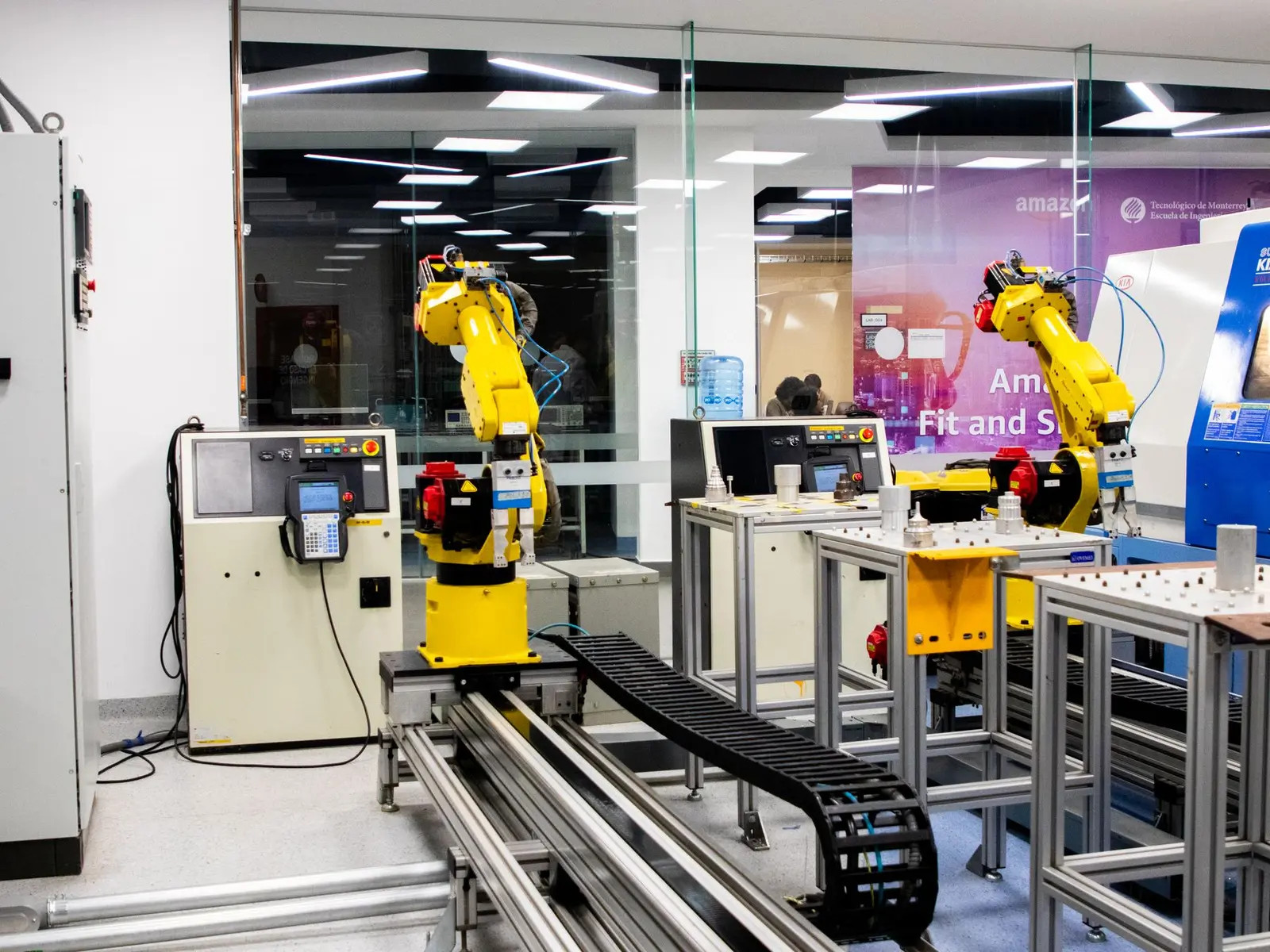
Robotic release-agent spraying
Repeatable mould coverage with a controlled, programmed spray cycle.
Automating release-agent application can stabilise coverage, timing and operator exposure controls in moulding and forming processes. The cell is engineered around the mould geometry, release chemistry, deposition target, process temperature and machine cycle.
Cycle integration
Fit the spray sequence into the moulding process.
The robot must enter only when the machine is in a defined safe state and the mould is presented consistently. Interlocks, access logic, safe positions and recovery sequences are therefore central to the design.
A programmed path can focus material on functional areas, avoid selected features and adjust the recipe for mould variants. The required wetting, flash-off or dwell time is included in the cycle assessment.
- Machine-ready and robot-safe handshake
- Defined mould-open and access positions
- Recipe selection for mould variants
- Spray, dwell and exit sequence control

Material control
Apply what the process needs—where it needs it.
The objective is not simply to spray faster. It is to achieve sufficient, repeatable release performance while controlling excess material, build-up and contamination of nearby equipment.
Applicator selection, pressure, fan pattern, distance, angle and speed are established with the process material and representative tooling. Cleaning access is designed into the cell.
- Targeted zones and keep-out areas
- Pressure and flow supervision options
- Automatic or guided nozzle cleaning
- Drip, mist and residue-management considerations
Environment and safety
Review the chemistry and temperature together.
Release agents can introduce vapour, mist, combustible or health risks, particularly around hot moulds and enclosed machines. Material safety data and the intended application method are required before the control concept is fixed.
Extraction, equipment suitability, segregation and safe maintenance access are defined in the project risk assessment and system-boundary agreement.
- Substance and temperature review
- Extraction and mist-control interfaces
- Guarding and controlled entry
- Safe isolation for cleaning and maintenance
Questions before concept
Practical answers for your spraying project.
Every system is engineered around your parts, materials, finish and production targets.
Browse all FAQs →Which moulding processes can be assessed?
Potential applications include composite moulding, rubber, plastics, die casting, foundry, thermoforming and other processes using a sprayed release or process agent. Suitability is application-specific.
Can the robot work with an existing moulding machine?
Often, subject to access, controls, machine state signals, guarding and safe recovery. We review the existing machine and interface documentation before confirming scope.
Can different moulds use different spray recipes?
Yes. Stored paths and material settings can be linked to mould or production recipes, with identification and fixture checks where required.
Will automation reduce release-agent consumption?
Controlled paths can support a material-reduction objective, but the achievable saving depends on the current process, applicator, part geometry and required release performance. It is confirmed through testing.
Discuss the real application
Automating mould or die spraying?
Send mould details, release-agent data, temperatures and machine-cycle information for an application review.