
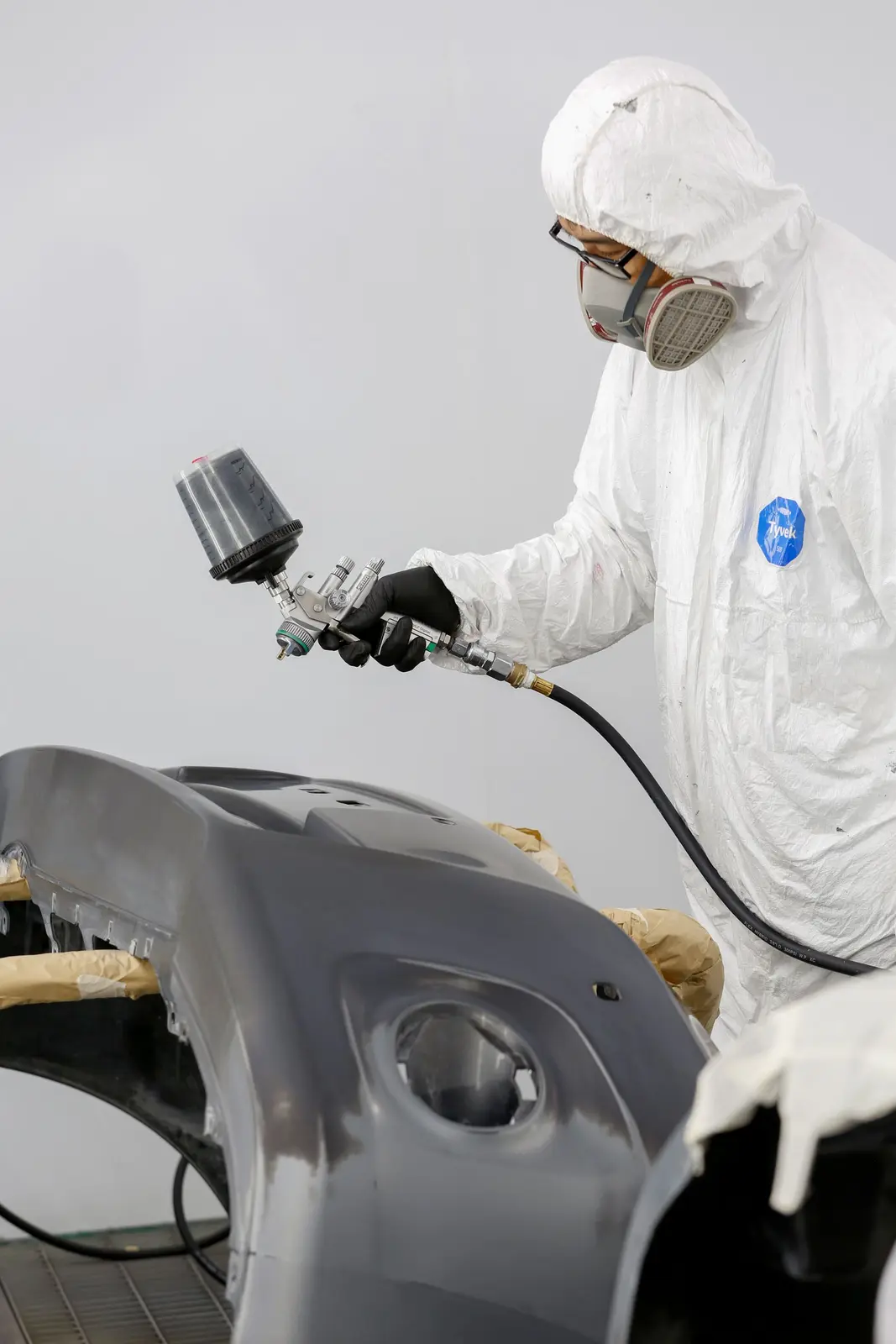
Overspray reduction
Target the part more consistently. Control the material more deliberately.
Robotic motion can support overspray reduction by maintaining defined gun distance, angle, speed, overlap and trigger points. The strongest result comes from combining path control with appropriate atomisation, material settings, fixturing and extraction.
Establish a baseline
Measure the current process before promising a saving.
Material use per accepted part, booth capture, rework, rejects, cleaning losses and colour-change waste form a more useful baseline than purchase volume alone.
We use the baseline to identify which losses are addressable through robotic control and which depend on applicator, material preparation, extraction or upstream quality.
- Material per accepted component
- First-pass yield and rework
- Booth, filter and cleaning losses
- Changeover and purge waste
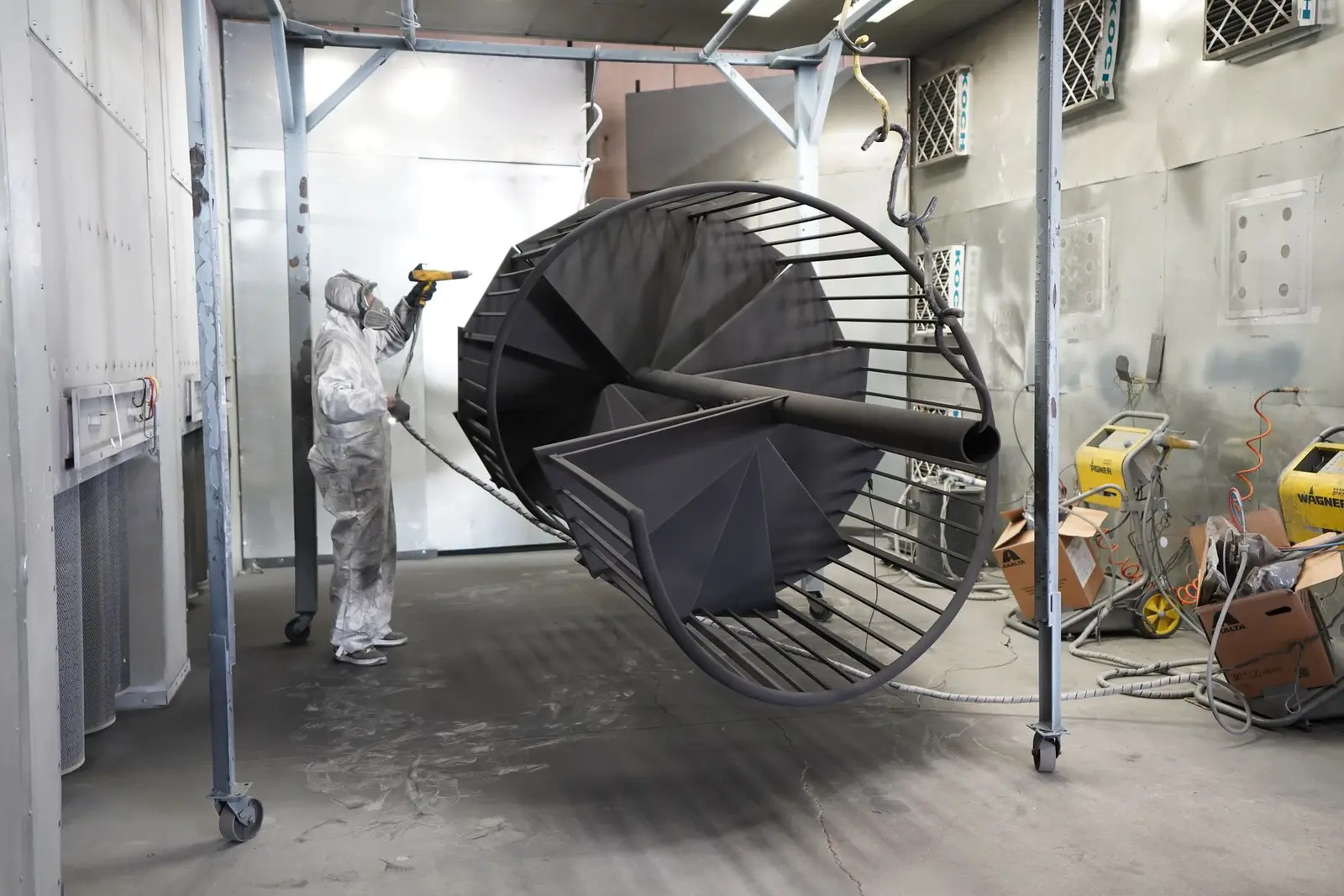
Control the path
Keep the spray pattern working on the target.
Programme structure can align the spray fan with the surface, limit unnecessary travel while the gun is active and control transitions at edges and corners.
Simulation and offline programming can accelerate development, but the final path is tuned on the real part with the real applicator and process settings.
- Consistent stand-off and gun orientation
- Defined overlap between passes
- Trigger timing at edges and gaps
- Speed control through corners and contours
Sustain the result
Build monitoring and maintenance into the routine.
A tuned programme will drift if nozzles wear, filters block, material condition changes or fixtures move. Practical checks and maintenance prompts help keep the process inside the intended window.
Where justified, pressure, flow, temperature or inspection signals can be logged against production recipes.
- Nozzle and applicator condition checks
- Fixture verification and datum control
- Process alarms and trend data
- Periodic material-use review
Questions before concept
Practical answers for your spraying project.
Every system is engineered around your parts, materials, finish and production targets.
Browse all FAQs →How much paint can robotic spraying save?
There is no responsible universal percentage. Savings depend on the existing transfer efficiency, current technique, part geometry, coating, gun technology and quality requirement. A baseline and representative trials are needed.
Is overspray eliminated?
Usually not. Atomised spraying normally creates some overspray. The objective is to reduce avoidable loss and capture remaining mist safely through the correct controlled environment.
Can material use be monitored?
Flow, pressure, shot or consumption data can be integrated where suitable equipment and measurement accuracy are available.
Does faster robot speed reduce overspray?
Not automatically. Speed must stay within the coating process window. Moving too quickly may cause poor coverage, while moving too slowly can create excess build or runs.
Discuss the real application
Build a credible overspray-reduction case.
Share current material use, reject data, part geometry and spray settings so the opportunities can be assessed.