
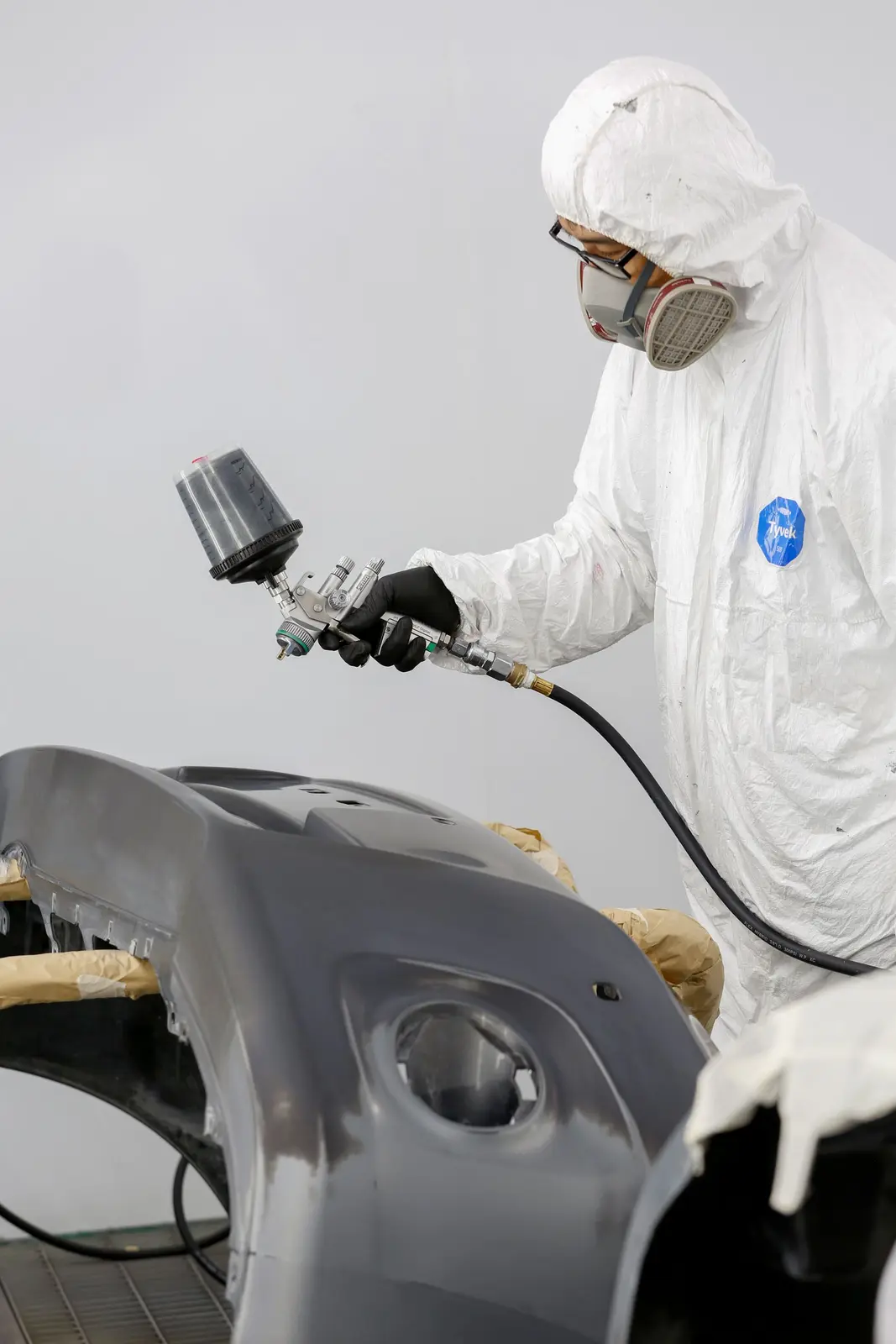
Hazardous-area spray systems
Start hazardous-area spray automation with the substance and risk assessment.
Where paints, solvents, vapours or combustible dust can create fire or explosion risk, robotic spraying must be developed from competent DSEAR assessment and area classification. Oxford Industrial Automation integrates the agreed controls and equipment requirements into the cell design.
Quick answer
What does DSEAR mean for a robotic spray cell?
DSEAR requires employers to assess and control safety risks from dangerous substances, including fire and explosion. Paints, varnishes and solvents may fall within that scope. The assessment identifies where explosive atmospheres may occur and the controls needed to avoid ignition and reduce consequences.
The robot, applicator, booth, extraction, material supply and electrical equipment must then be selected and integrated for the assessed conditions. “ATEX robot” is not a substitute for a complete system assessment.
- Current safety data sheets and process quantities
- Competent hazardous-area classification
- Equipment categories matched to the assessed zones
- Documented responsibilities across specialist suppliers
System interfaces
Make the safety conditions visible to the controls.
The cell may need permissives from extraction, booth airflow, fire systems, electrostatic equipment and material supply before spraying is allowed. Safe shutdown and restart behaviour must be agreed for each foreseeable fault.
Access, isolation, purging, maintenance and cleaning can create different conditions from normal production. These modes belong in the risk assessment and controls design.
- Extraction-proven and booth-ready permissives
- Spray inhibition on agreed fault conditions
- Safe access and energy isolation strategy
- Maintenance and cleaning modes assessed
Project boundary
Keep legal duties and technical ownership clear.
Oxford Industrial Automation can integrate the robot cell around the supplied assessment, classification and specialist equipment requirements. The employer retains its legal duties, and competent specialists may be needed for DSEAR, ventilation, fire protection and inspection.
We record interface signals, assumptions, responsibilities and required evidence so the project can be reviewed as one system.
- Design assumptions captured and controlled
- Supplier documentation collected into the technical file
- Inspection and validation responsibilities agreed
- Operator information and training inputs defined
UK guidance: For authoritative UK duties, see the Health and Safety Executive DSEAR guidance.
Buyer questions
Answers for an initial application review.
Final equipment and performance are confirmed against your parts, material, environment and production requirements.
Browse all FAQs →Does every robotic paint cell need an ATEX robot?
No. Equipment selection follows the substances, process and competent hazardous-area assessment. Where a zone is identified, equipment must be suitable for that assessed area.
Is a spray booth automatically DSEAR compliant?
No single component makes the process compliant. The employer must assess and control the complete activity, substances, equipment, ventilation and operating conditions.
What information should be supplied first?
Provide current safety data sheets, coating quantities, atomisation method, booth and extraction details, proposed cleaning process and any existing DSEAR assessment or zone drawings.
Can Oxford Industrial Automation carry out the DSEAR assessment?
The project scope must identify the competent party responsible for assessment and classification. We integrate the resulting requirements and agreed interfaces into the automation design.
Discuss the real application
Turn your production need into a workable concept.
Share representative parts, material data, finish criteria and required output for an initial engineering review.