
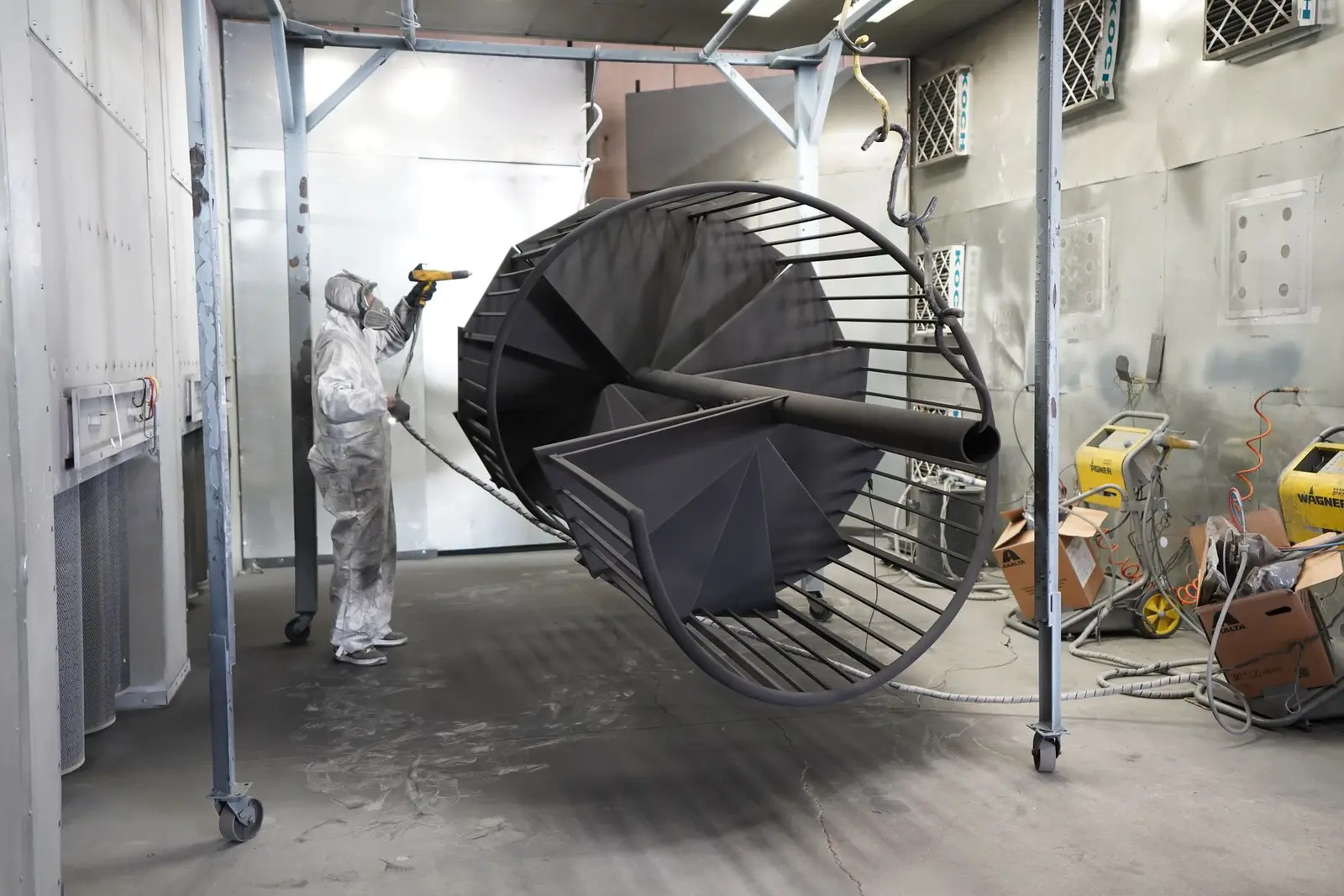
Electrostatic paint spraying
Robotic electrostatic spraying planned around the complete coating process.
Electrostatic application can improve how charged coating is attracted to a suitably earthed workpiece. A successful robotic system depends on the material, conductivity, earthing, gun technology, airflow, geometry and safe operating environment—not the robot alone.
Quick answer
When does robotic electrostatic spraying fit?
Robotic electrostatic spraying is considered when the coating and workpiece are compatible with an electrostatic process and repeatable coverage is required. Conductive substrates, reliable earthing and controlled presentation are central to the concept.
Wrap-around can help coat accessible edges and rearward surfaces, but recessed geometry and Faraday-cage effects still require careful gun orientation, distance and parameter development.
- Compatibility confirmed with the coating and equipment suppliers
- Earthing strategy designed and verified
- Robot path developed for edges, recesses and shadowed areas
- Process trials used where finish risk is significant
Transfer efficiency
Target material savings through a tuned process.
Electrostatic attraction may support transfer-efficiency and overspray objectives. The achievable result varies with material resistivity, atomisation, voltage, part geometry, line speed and booth airflow. We avoid generic percentage claims and define the measurement method for the actual application.
Robot triggering, approach and lead-out can be coordinated with material flow so coating is delivered where it is needed. Recovery or filtration arrangements remain part of the wider booth design.
- Defined baseline and acceptance method
- Controlled gun-to-part distance and orientation
- Recipe management for part and coating variants
- Monitoring options for process pressures and permissives
Safety and integration
Treat high voltage and flammable material as system-level design inputs.
The risk assessment must address the coating, ignition sources, electrostatic equipment, earthing, extraction and any potentially explosive atmosphere. Equipment selection follows the assessed zone and application requirements.
The cell controls can supervise the agreed permissives and prevent spraying when required conditions are not healthy. Final responsibilities are documented across the integrator and specialist suppliers.
- Safety data and hazardous-area assessment inputs
- Booth, extraction and electrostatic permissives
- Safe cleaning, isolation and maintenance access
- Operator information and validation evidence
Buyer questions
Answers for an initial application review.
Final equipment and performance are confirmed against your parts, material, environment and production requirements.
Browse all FAQs →What parts suit electrostatic paint spraying?
Conductive workpieces with reliable earthing are common candidates. The coating, substrate, geometry, fixture and finish requirement must be reviewed together.
Can electrostatic spraying coat recesses?
It can, but deep recesses and Faraday-cage effects may limit deposition. Path tuning, gun settings and trials are often needed.
Is electrostatic spraying always more efficient?
No. It can support transfer efficiency, but the result is application-specific and should be measured against an agreed baseline.
Can colour change be automated?
Yes, where the selected paint supply and applicator support it. Flushing, contamination limits, waste, retained volume and change time must be specified.
Discuss the real application
Turn your production need into a workable concept.
Share representative parts, material data, finish criteria and required output for an initial engineering review.