
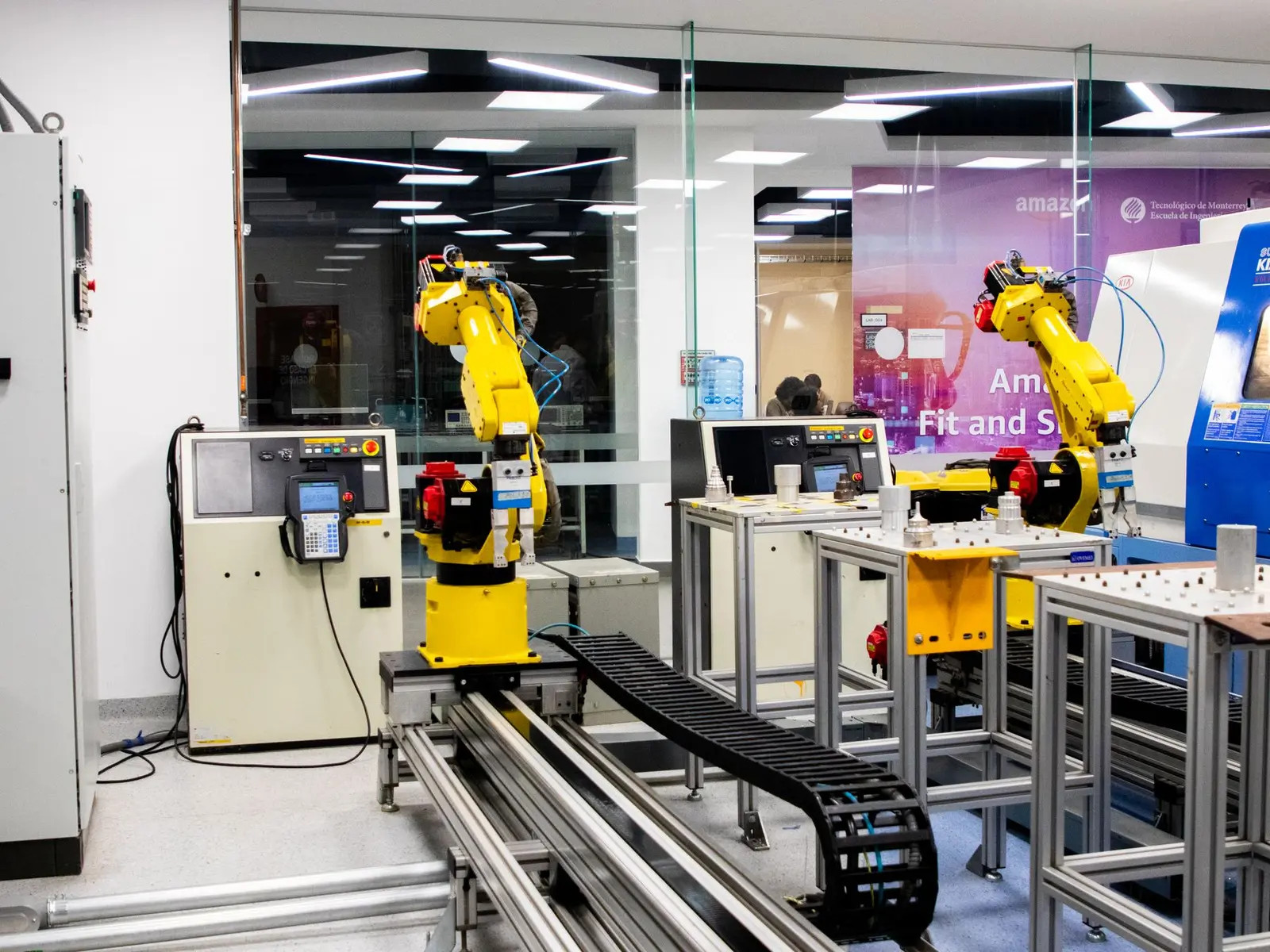
Cobot spraying assessment
Decide whether a cobot fits the process—not just the available floor space.
A collaborative robot can offer compact, accessible automation for selected low-risk applications, but a cobot does not make spraying inherently collaborative. The substance, pressure, atomisation, fumes, ignition risk, moving applicator and cleaning process all form part of the risk assessment.
Quick answer
Can a cobot be used for paint or coating spraying?
It may be possible for a defined application, but the complete operation must be assessed. Even if robot motion is power-and-force limited, the spray itself may create inhalation, injection, fire, explosion, eye or skin hazards that require enclosure, extraction, interlocks or separation.
For flammable solvents, combustible powders or classified areas, the hazardous-area basis and equipment suitability are decisive. A standard cobot should never be assumed suitable because it is marketed as collaborative.
- Safety data and intended spray pressure reviewed first
- Exposure, extraction and hazardous-area requirements defined
- Applicator, hoses and fittings included in payload calculations
- Normal production, cleaning and maintenance tasks assessed
Cobot or industrial robot
Compare performance and safeguarding for the real duty.
Cobots can be attractive for low payloads, modest speeds, frequent manual interaction and non-hazardous materials. Guarded industrial robots may provide better reach, speed, environmental protection and equipment options for demanding spray cells.
The smallest physical footprint is not always the smallest safe footprint. Extraction, process equipment, cleaning access and exclusion zones can dominate the layout regardless of robot type.
| Approach | Typical reason to consider it | Important checks |
|---|---|---|
| Cobot may suit | Low-risk material and modest throughput | Process hazards still need controls |
| Industrial robot may suit | Faster cycles, harsh duty or specialist options | Safeguarded cell and access planning |
| Fixed automation may suit | Simple, repetitive geometry | Lower flexibility for product variation |
Prove suitability
Test reach, finish, cycle and operator interaction together.
A feasibility trial should include the real applicator mass, hoses, representative path and coating behaviour. It also needs to consider loading, recipe selection, cleaning, tip inspection and recovery after faults.
If a process cannot operate safely at collaborative limits, the same robot may still be used inside a safeguarded arrangement, subject to the application and risk assessment. The design follows the task, not the label on the robot.
- Reach and singularity study with full tooling
- Cycle time at permitted operating conditions
- Finish evidence on representative products
- Risk-reduction measures and residual-risk review
Buyer questions
Answers for an initial application review.
Final equipment and performance are confirmed against your parts, material, environment and production requirements.
Browse all FAQs →Does a cobot spray cell need guarding?
It may. Guarding or separation can still be required because of the spray process, pressure, applicator, workpiece, fixtures, hazardous substances or achievable robot speed. The risk assessment decides.
Can a cobot spray solvent-based paint?
Do not assume so. The coating safety data, DSEAR assessment, area classification, equipment suitability, extraction and ignition controls must be established by competent assessment.
Are cobots slower than industrial painting robots?
Collaborative operation can impose lower speeds and forces. Actual cycle time depends on the robot, path, safeguarding mode, applicator and process window.
When is fixed spray automation better?
For simple repeat geometry, a fixed gun, reciprocator or purpose-built mechanism may achieve the duty with less complexity. We compare the options during concept development.
Discuss the real application
Turn your production need into a workable concept.
Share representative parts, material data, finish criteria and required output for an initial engineering review.