
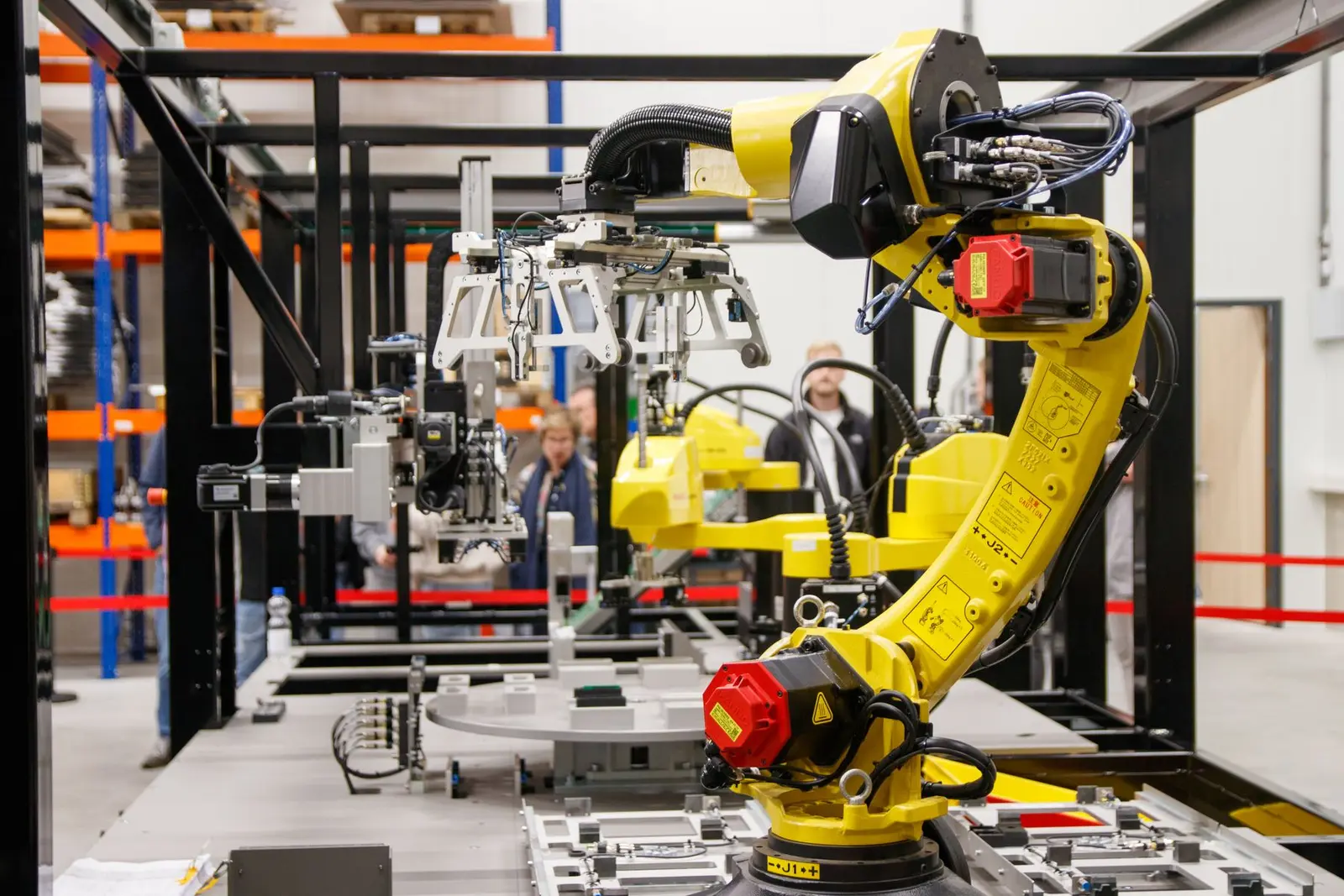
Robotic sealant dispensing
Repeatable sealant beads start with control of path and material delivery.
A robotic sealant dispensing system coordinates the applicator path with metering, pressure, temperature, part location and trigger timing. The cell is engineered around the bead geometry, material behaviour, joint access and production sequence.
Quick answer
What does robotic sealant dispensing improve?
Robotic dispensing can repeat the same nominal path and trigger sequence for each presented part. This supports consistent bead placement and makes the process easier to document than a variable manual application.
The correct pump, metering unit and applicator depend on the chemistry, viscosity, package, mix ratio, cure behaviour and required flow. Material suppliers and dispensing specialists provide essential process data.
- Defined bead width, height and start-stop condition
- Coordinated robot speed and material flow
- Stable fixture datums and part detection
- Purge, cleaning and tip-management planning
Process monitoring
Detect the conditions that can create a missed or poor bead.
Monitoring options can include pressure, flow, shot volume, temperature, material level and applicator state. Vision or laser inspection may be considered where the bead and surface allow reliable inspection.
The required level of checking should reflect the consequence of a defect. We define what the controls must detect, what happens after a failed check and how the event is recorded.
- Pressure and flow windows where appropriate
- Part-present and recipe verification
- Bead inspection feasibility review
- Fault handling and traceability requirements
Application fit
Prove access, bead quality and cycle time together.
Joint geometry, robot wrist angle, nozzle length and hose routing affect whether a stable bead can be applied. A reach and access study uses the real part and fixture concept.
Trials are valuable where the material is difficult to start and stop, the surface varies or the bead has a functional sealing requirement. Acceptance samples and the inspection method should be agreed early.
- Representative parts and material available for trials
- Reach study including applicator and dress pack
- Cycle-time model with purge and maintenance tasks
- Documented acceptance sample or bead criteria
Buyer questions
Answers for an initial application review.
Final equipment and performance are confirmed against your parts, material, environment and production requirements.
Browse all FAQs →What materials can a dispensing robot apply?
Typical candidates include compatible adhesives, sealants, silicones, mastics and other compounds. Equipment selection depends on the specific product data and required bead.
Can the system mix two-part materials?
Yes, specialist metering and mixing equipment can be integrated when it is compatible with the material, ratio, pot life and production duty.
How is bead quality checked?
Options include pressure or flow monitoring, shot-volume checks and suitable vision or profile inspection. The method depends on bead geometry, surface and defect risk.
Can dispensing be added to an existing line?
Potentially. The review must cover workspace, takt time, part location, material supply, safety, controls interfaces and maintenance access.
Discuss the real application
Turn your production need into a workable concept.
Share representative parts, material data, finish criteria and required output for an initial engineering review.